Somewhere about forty minutes from the campground, someone in the car said what everyone else was already thinking: maybe we should just turn around and go home. It wasn’t a joke. By that point in the drive, the trip already felt like it was going wrong, and we hadn’t even arrived yet.
How the morning went sideways before we’d even left
It started small. The cooler wasn’t fully packed the night before, which meant a rushed twenty minutes of grabbing food out of the fridge while everyone else waited in the car. Then it turned out someone had forgotten their sleeping pad entirely, which meant a stop at an outdoor store on the way that ate almost an hour we didn’t have. By the time we actually got on the highway, we were running nearly two hours behind the plan, and the mood in the car had shifted from excited to tense.
The moment it almost fell apart
Traffic added another thirty minutes we hadn’t accounted for. Somewhere around that forty-minutes-out mark, tired, hungry, and frustrated with each other over small things that weren’t really anyone’s fault, the idea of just turning around started to feel less like a joke and more like a real option. It would have been easy to do. Nobody would have argued very hard against it.
What actually changed our minds
What kept us going wasn’t some burst of determination. It was much smaller than that: someone pointed out we’d already lost half the driving day to mistakes, and turning around now would mean losing the whole weekend to mistakes too. That reframing helped. We weren’t failing at camping, we were just having a rough morning, and a rough morning doesn’t have to become a wasted weekend.
Arriving late and setting up in a hurry
We pulled into the site with less than an hour of usable daylight left, which meant a genuinely rushed setup. Tent up first, no time to walk the site properly first, no time to think carefully about layout. It wasn’t the calm, unhurried arrival we usually aim for. It was fast, a little sloppy, and functional enough to get us through the first night.
The turnaround, almost literally
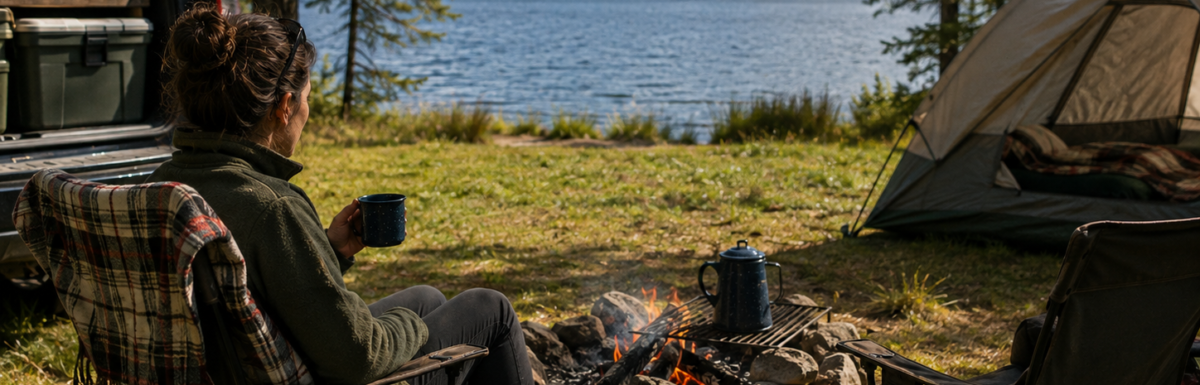
Something shifted once the tent was actually up and the first pot of water was boiling for dinner. The tension from the drive didn’t disappear instantly, but it started to fade the way it usually does once there’s nothing left to do but sit down. By the time it was fully dark and the fire was going, the morning’s stress felt like it belonged to a different day entirely.
Saturday: the trip we actually came for
Saturday looked nothing like the morning before. We slept in later than planned, made a slow breakfast, and spent the day doing exactly the kind of low-key nothing that had been the whole point of the trip in the first place. Nobody mentioned the drive. It had already stopped mattering.
What the near-turnaround actually taught us
The real lesson wasn’t about grit or pushing through. It was something more practical: a rough start doesn’t predict a rough trip, and a lot of the tension from a bad morning fades the moment there’s nothing left to manage but the actual afternoon in front of you. We also learned a smaller, more useful lesson about packing the car the night before, every time, without exception, since almost the entire bad morning traced back to that one skipped step.
What we’d tell anyone else in that moment
If you’re sitting in a tense car forty minutes from a campsite, wondering if this whole trip was a mistake, it’s worth remembering that the drive is not the trip. The trip starts once you’re there, tent up, fire going, with nothing left to do but exist in the place you drove to. Almost none of the stress that builds up in a delayed, chaotic morning survives contact with an actual quiet evening at a campsite.
Why we’re glad we didn’t turn around
If we’d turned the car around that day, we’d have gone home with nothing but the memory of a stressful morning. Instead we came home with a weekend that turned out to be one of the more restful ones we’ve had, oddly enough because the contrast between the rough start and the calm two days after made the calm feel even more noticeable than usual.
What changed after that trip
Since then, the cooler gets packed the night before, without exception, no matter how tired anyone is when they get home from work. It’s a small rule, and it’s prevented a repeat of that particular kind of morning more than once. We also talk now, openly, about the option to just turn around if a trip is genuinely going badly, since knowing that option is always on the table somehow makes it easier to push through the moments when turning around isn’t actually the right call.
How to tell the difference next time
The honest test we’ve landed on is this: if the thing going wrong is about logistics, a late start, a forgotten item, general crankiness from the drive, it’s usually worth pushing through, since those problems tend to fade fast once you arrive. If the thing going wrong is about actual safety, severe weather, a real injury, a legitimately unsafe road, that’s a different category entirely and worth respecting without argument. Most near-turnarounds fall into the first category, which is exactly why they’re worth pushing through more often than they feel like it in the moment. It’s a distinction worth actually talking through as a group before you’re in the middle of it, since a calm conversation at home lands very differently than the same conversation happening tense and tired in a car.
Every group that camps regularly probably has a version of this story: the trip that almost didn’t happen, saved by nothing more dramatic than deciding to keep driving. It’s rarely the smooth trips people remember best. It’s the ones that almost weren’t, and the small, unglamorous decision to keep going anyway.