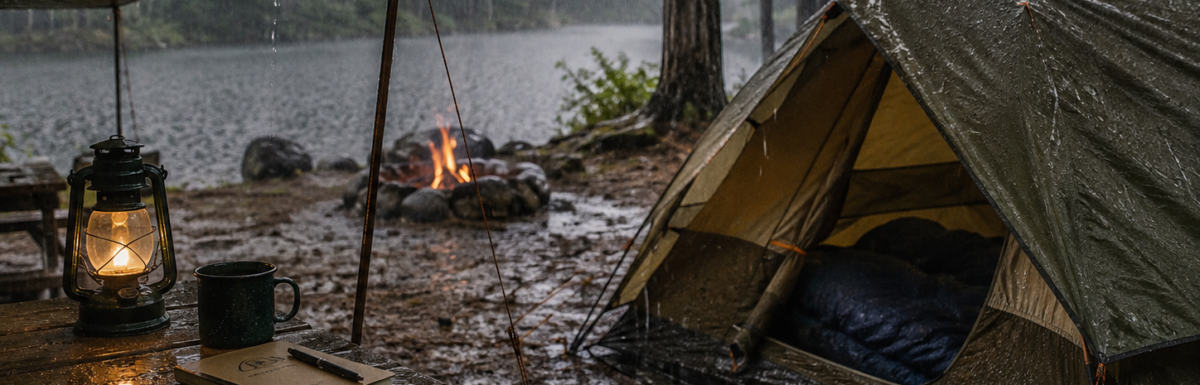
Every first-time camper has a story about the trip that almost went wrong. This one is about rain. Not a passing shower, but a genuine, all-night, still-going-at-breakfast kind of rain, on the very first tent camping trip any of us had ever taken. Looking back, it turned out to be one of the more useful things that could have happened, even though it didn’t feel that way at the time.
The forecast we half-ignored
The forecast had said “chance of showers” for two days straight before we left, and we did what a lot of first-timers do: we hoped it would shift. It didn’t. By the time we arrived Friday afternoon, the sky already had that heavy, low look that usually means something is coming, and coming soon. We set up the tent quickly, more out of a vague sense that we should hurry than any real understanding of what was actually about to happen.
The mistake that mattered most
The rainfly went on, but not staked out properly. We’d read the setup instructions once, in the store, and figured we more or less remembered how it worked. We didn’t stake the guy lines taut, which meant the fly sat loosely against the tent walls instead of a few inches above them. Nobody in the group had ever seen what happens to a loose rainfly in real rain, so nobody thought to fix it before dark.
What the night actually felt like
The rain started around nine and didn’t let up until well past sunrise. For the first hour it was almost cozy, that steady drumming sound on the tent roof that people talk about liking. By midnight, we noticed the tent walls were damp to the touch in a few spots, right where the loose rainfly had been resting directly against the fabric instead of holding a gap above it. Water doesn’t usually punch through a rainfly directly. It travels along contact points, and we’d unknowingly created several of them.
The scramble at 2am
Somewhere around two in the morning, someone woke up to a genuinely wet sleeping bag corner, and that was the moment the whole group got up to deal with it. In the dark, in the rain, we retied every guy line as tight as we could, using a headlamp that kept getting water in the lens. It worked. Within twenty minutes the drip had slowed to nothing, and by the time we climbed back in, damp but no longer actively getting wetter, the worst of it was over.
The morning after
Morning came gray and still dripping, but the tent had held once the fly was actually doing its job. We made coffee under a tarp we’d brought almost as an afterthought, glad in that moment that we’d packed it at all. Breakfast was a strange mix of relief and exhaustion, the kind that comes from a genuinely bad night that still somehow didn’t ruin the trip. We talked about packing up early and heading home, and we almost did.
Why we stayed anyway
What changed our minds was simple: the rain had actually let up to a drizzle by midmorning, and drying gear out under the tarp felt more appealing than repacking soaked equipment into a hot car. So we stayed, and the rest of the weekend turned out fine, if a little muddier than planned. By Saturday afternoon the sun came out properly, and the site that had felt miserable twelve hours earlier looked completely different, steam rising gently off the ground as everything dried.
What we actually learned
The lesson wasn’t “avoid camping when rain is forecast.” It was much narrower and much more useful than that: stake the rainfly properly, every single time, even if it feels like overkill on a night that doesn’t look threatening yet. We also learned that a tarp, packed almost as an afterthought, ended up being one of the most valuable things in the car. And we learned that a rough night doesn’t automatically mean a ruined trip, as long as you’re willing to problem-solve at two in the morning instead of just lying there hoping it gets better on its own.
What we do differently now
Every trip since, the rainfly gets staked out fully before anyone even thinks about starting dinner, rain in the forecast or not. We also keep the same tarp permanently in the camping bin rather than deciding, trip by trip, whether to bring it. It’s become one of those pieces of gear nobody questions anymore.
What we’d say to anyone about to skip a trip over a rainy forecast
If we’d seen that same forecast now, with everything we know, we probably still would have gone. The rain wasn’t really the problem that night. The unpracticed setup was. A properly staked rainfly handles genuine downpours without much drama, and it took exactly one miserable night to learn that lesson permanently. It’s a strange kind of gratitude, being thankful for a night that was genuinely unpleasant while it was happening, but that’s honestly how it feels looking back.
What we’d tell our first-trip selves
If we could go back and hand our first-time-camping selves one piece of advice, it wouldn’t be about gear or route planning. It would be simply this: stake out the rainfly like you mean it, every single time, on every trip, regardless of what the sky looks like when you’re setting up. That one habit would have turned a genuinely rough night into an unremarkable one, and it’s the single cheapest insurance policy in all of camping.
Looking back, that miserable, soaked first night is the story we tell most often when someone asks about our early camping trips, and it’s usually followed by the same conclusion: it was a rough one, but it taught us more in a single night than three easy trips would have. Sometimes the trip that goes a little wrong is the one that actually makes you a camper.