There’s a particular kind of nervousness that comes with camping somewhere brand new. You’ve read the site descriptions, checked the photos twice, and still have no real idea what you’re driving into until the car is actually parked and you’re standing there looking at it. This is the story of one of those weekends: a provincial park none of us had ever set foot in, picked mostly because it was close and had a decent-sounding loop of tent sites.
The drive and the arrival
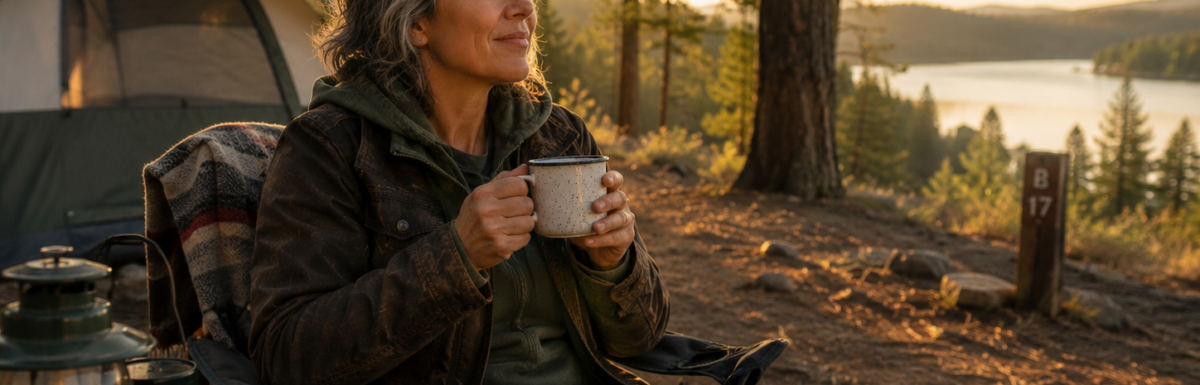
We left later than planned, which is almost always how it goes on a Friday. By the time we pulled off the highway and onto the gravel road leading into the park, the light was already turning that low, gold colour that looks beautiful and also means you have less time than you think. The site itself turned out to be better than the photos, tucked back from the main loop with a decent stretch of trees between us and our nearest neighbor. That was the first thing we got right without really trying: we’d filtered for sites described as “wooded” rather than “open,” and it paid off the moment we needed shade the next afternoon.
Where things started going sideways
The tent went up fine. What didn’t go fine was realizing, about ten minutes after unrolling the sleeping pads, that we’d left one of the two lantern battery sets in a bag back at the house. Not a disaster, but enough to mean one headlamp had to do double duty for the whole trip, passed back and forth on the walk to the bathroom like a strange little relay race. It’s the kind of small mistake that doesn’t ruin anything but teaches you something anyway: pack the backup batteries separately from the lantern itself, not in the same bag, so a quick pre-trip check actually catches the gap.
The part that actually went well
Dinner was simple on purpose. We’d prepped everything at home two nights before, so cooking on-site was just heating and assembling rather than cooking from scratch. That decision made the first evening feel unusually calm. There was no scramble to figure out a recipe by headlamp light, no dishes piled with raw ingredient mess, just a pot on the stove and enough time left over to actually sit and watch the sky change colour before it got properly dark. If there’s one habit from this trip worth repeating on every future one, it’s that: simplify the first night’s meal more than feels necessary, because the first night is when everyone’s tired, and patience is thinnest.
The morning that almost went wrong
Saturday morning brought the one real scare of the trip. We woke up to a rustling sound just outside the tent wall, close enough that everyone went quiet and still for a solid ten seconds. It turned out to be a raccoon investigating the cooler, which we’d left latched but not fully weighted down. Nothing got into it, but it was a clear reminder that “latched” and “actually secure” aren’t the same thing, especially at a site with obvious wildlife traffic. We spent breakfast talking through what we’d do differently, and by that afternoon the cooler was tucked into the car overnight instead of left out, which is honestly where it should have been from the start.
What the site taught us about slowing down
By midday Saturday, something shifted. Nobody had an agenda beyond a short walk to the water and back. We sat around camp longer than expected, not because there was nothing to do, but because there was nowhere we needed to be instead. That’s the part that’s hard to describe to someone who hasn’t done a slow weekend like this: the value isn’t in the hike or the view, though both were nice. It’s in the stretch of hours with nothing pulling at you, which is rarer than it should be and doesn’t happen by accident. It happens because the trip was simple enough to allow it.
Packing up and the drive home
Sunday morning pack-up went faster than expected, mostly because everything had a place from day one and nobody had let the site slide into chaos over the two days. That’s a small detail that made a bigger difference than it probably should have: five minutes of tidying each evening meant Sunday wasn’t spent hunting for things scattered across the site. We were back on the road by late morning, gear stowed, and already talking about which provincial park to try next.
What we’d actually change next time
If we did this exact weekend again, three things would change: backup batteries packed in their own separate bag, the cooler secured or stowed every single night regardless of how tired we are, and an even simpler dinner plan for the first night, since even “simple” turned out to have room to get simpler. Nothing about the trip was dramatic. That’s sort of the point. The best camping weekends usually aren’t the ones with the wildest story; they’re the ones where the small mistakes were minor, the good habits held up, and everyone came home a little more rested than when they left.
One more thing…
We almost didn’t try this particular park at all. It had fewer reviews online than the places we usually default to, and the site photos were a few years old, grainy in that way that makes you wonder what’s changed since. In hindsight, some of the best sites we’ve found have come from exactly that kind of listing: a little under-documented, a little uncertain, and better in person than the photos let on. It’s worth being willing to take that small gamble occasionally instead of only ever booking the places with a hundred glowing reviews.
That’s really the whole appeal of trying a new site: you don’t know exactly what you’re walking into, but with a simple enough plan, most of what goes wrong is small enough to laugh about by Sunday.