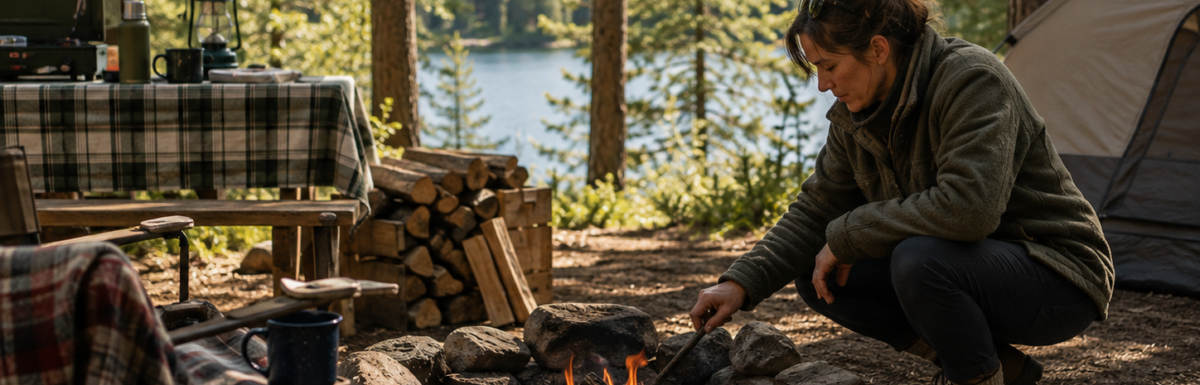
A campfire is one of the best parts of camping and one of the few places where a small mistake can turn into a genuinely serious problem. Most campfire safety habits are simple, but they’re easy to skip when you’re tired, it’s getting dark, and everyone’s ready to relax. Building the right habits now means you don’t have to think hard about them later, which is exactly when it matters most, since the moment you’re most tempted to cut a corner is usually the moment corners shouldn’t be cut.
Here are nine habits worth building into every trip, no matter how many times you’ve done this before.
1. Check the local fire restrictions before you leave
Rules change based on drought conditions and time of year, and they can shift from “campfires allowed” to “fires banned entirely” with little notice during dry seasons. A quick check of the local land management website or a call to the campground before you go takes five minutes and can save you from an unsafe or illegal fire, and from a very awkward conversation with a ranger who has to tell you to put it out.
2. Use an existing fire ring whenever one is available
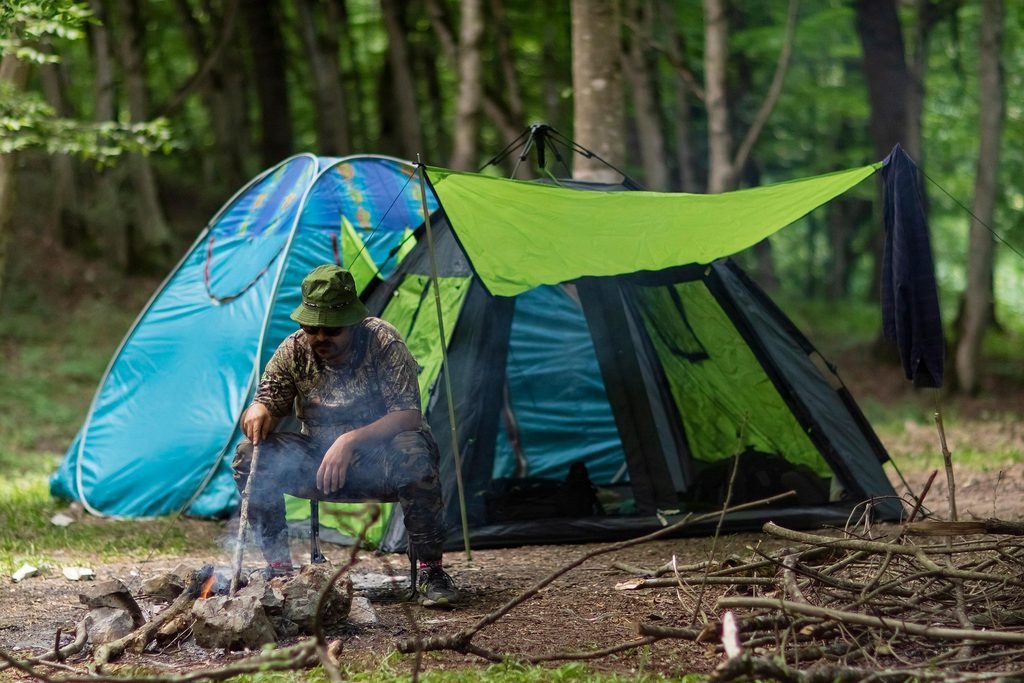
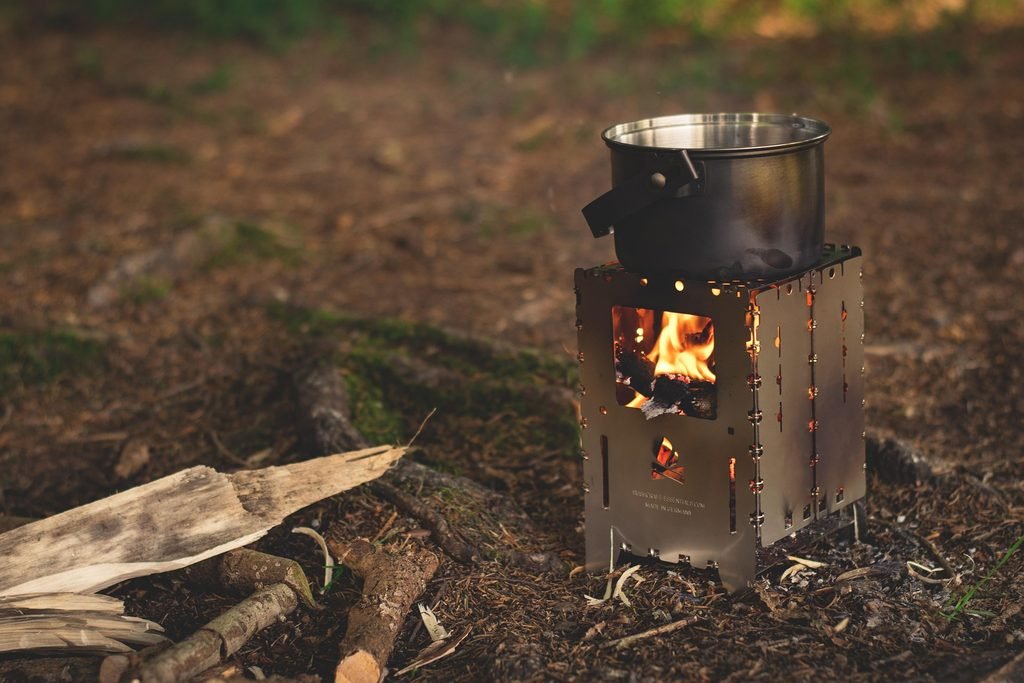
Building a new fire pit disturbs more ground than necessary and increases the risk of the fire spreading through roots or dry material underground. If a ring already exists at your site, use it. If you’re somewhere without one, keep your fire small and contained with rocks, and clear that spot of any overhanging branches first. A ring that’s already scarred black from past fires is also a sign the ground underneath has been through this before and is less likely to hide flammable roots close to the surface.
3. Clear a real space around the fire
Sweep away leaves, dry grass, and debris in a wide circle around the fire ring, not just right up against the edge. Sparks travel farther than people expect, especially on windy nights, and a few extra minutes clearing space is far cheaper than dealing with a spot fire that’s already caught in dry grass ten feet away. Late summer and fall, when the ground is driest, deserve an even wider buffer than you’d clear in spring.
4. Keep water or dirt within arm’s reach the entire time
Not somewhere in the car. Not “we’ll grab some if we need it.” A bucket of water or a shovel for dirt should sit next to the fire from the moment it’s lit until it’s fully out, every single time, even for a fire you only expect to burn for twenty minutes. Refill the bucket the moment it gets low rather than waiting until you actually need it.
5. Never leave a fire unattended, even for a few minutes
This is the one rule that gets broken most often, usually for something that feels harmless: running to the bathroom, grabbing something from the tent, chasing down a kid. Fires can flare unexpectedly, and “just a few minutes” is exactly when accidents happen. Designate someone to stay if the group needs to split up, even if it feels like overkill, and treat that job as a real responsibility, not a formality.
6. Keep the fire smaller than you think you need
A big roaring fire looks impressive, but a smaller, well-managed fire is easier to control, uses less wood, and is genuinely just as good for cooking and warmth once you’re used to it. A bigger fire mostly just adds risk. It burns through your firewood supply far faster than the actual benefit is worth, and you’ll be scrounging for more wood by the second night.
7. Know how to actually put a fire out, not just let it die down
A fire that looks out can still have hot coals underneath capable of reigniting or causing burns. The real process: douse it with water, stir the ashes, douse again, and repeat until there’s no hissing sound and the ashes are cool enough to touch with the back of your hand. This takes longer than most people expect, often a full ten minutes past the point where it looks finished, and it’s worth doing properly even if it means staying up a little later than planned.
8. Be honest about wind conditions
If it’s gusty, that’s not a great night for a fire, even if you technically could have one. Wind carries embers farther and faster than people account for, and it’s one of the leading factors in campfires that get out of control. A calm night with a smaller fire beats a windy night with a big one, every time, and skipping the fire for one evening is a small trade for not being the reason a dry field goes up.
9. Teach kids the boundary, not just the rules
If you’re camping with children, a physical boundary (a line of rocks, a designated “safe zone” a few feet back) tends to work better than verbal reminders alone. Kids understand a visible line more easily than an abstract instruction to “stay back,” and it saves everyone from repeating the same warning all evening while trying to actually enjoy the fire themselves.
None of these habits are complicated, and most experienced campers do them without thinking twice. The goal isn’t to make campfires feel scary. It’s to make sure the thing that makes camping feel cozy and special stays that way, instead of becoming the reason a trip goes wrong, or the reason a whole campground has to deal with a much bigger problem than one family’s dinner fire.
Fire safety habits are one of those things that feel like overkill right up until the one night they’re not, and there’s no way to know in advance which night that will be. Treat every fire the same way, and it stops being something you have to remember to do carefully and just becomes how you do it, full stop.