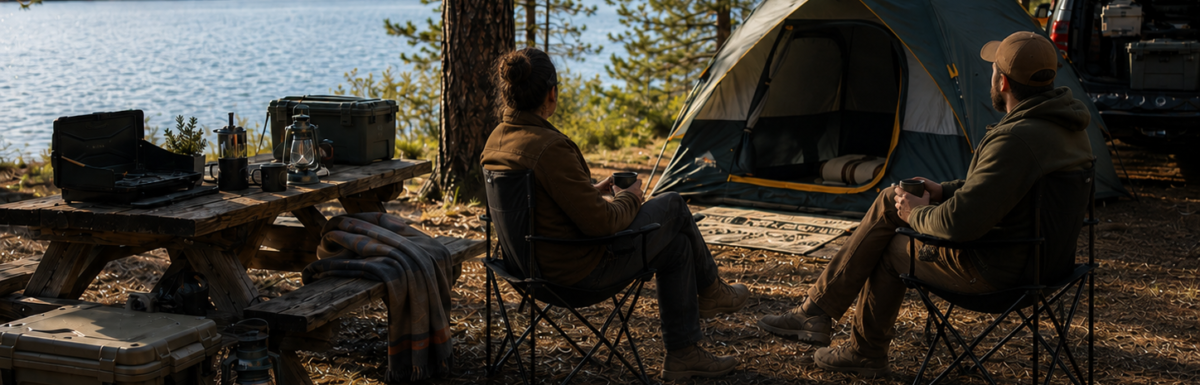
A campsite can feel like a patch of dirt with a tent on it, or it can feel like a place you actually want to spend three days. The difference usually isn’t gear budget. It’s a handful of small choices about how the site gets set up and used, the kind of choices that take almost no extra time but change how a place feels the moment you walk into it. Two families can pull into the same loop, unload nearly identical gear, and end up with campsites that feel completely different by dinner, simply because of the order and intention behind how everything got arranged.
Here are eight ways to make a tent site feel more like a home base and less like a stopover.
1. Give the site a layout, not just a pile of stuff
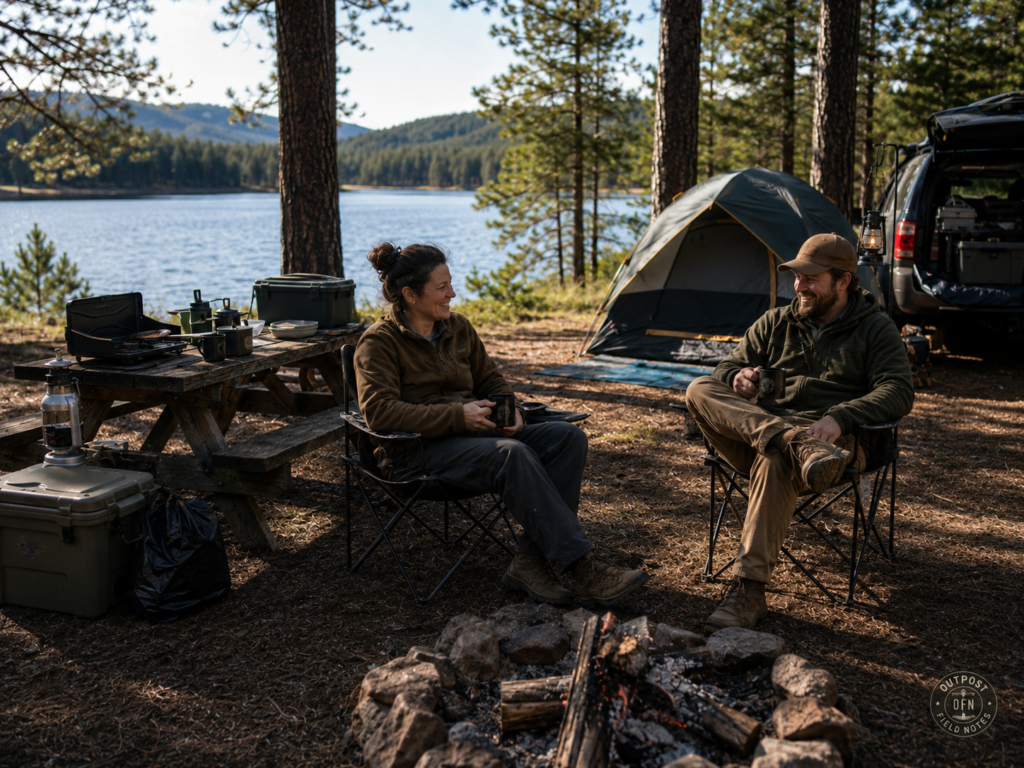
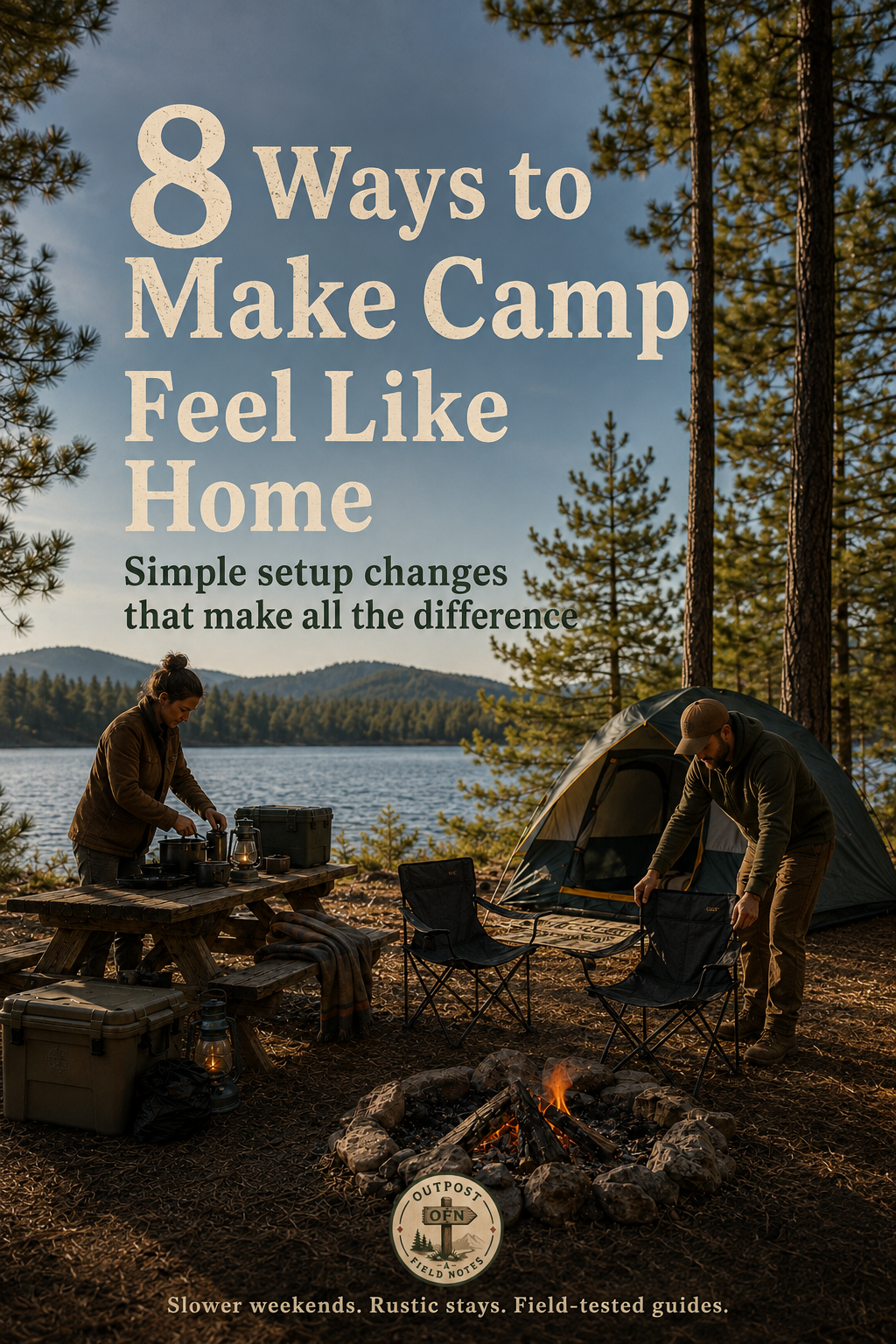
Before you start unpacking, take two minutes to look at the space and decide where things go: tent here, cooking area there, gathering spot near the fire ring. A site with an intentional layout feels calm. A site where gear just landed wherever it was carried feels chaotic, even if it’s the exact same stuff spread across the same amount of ground. Walk the perimeter first, note where the sun rises and where it’ll set, and let that inform where you put the tent door and the seating area before a single bag comes out of the car.
2. Create one central gathering spot
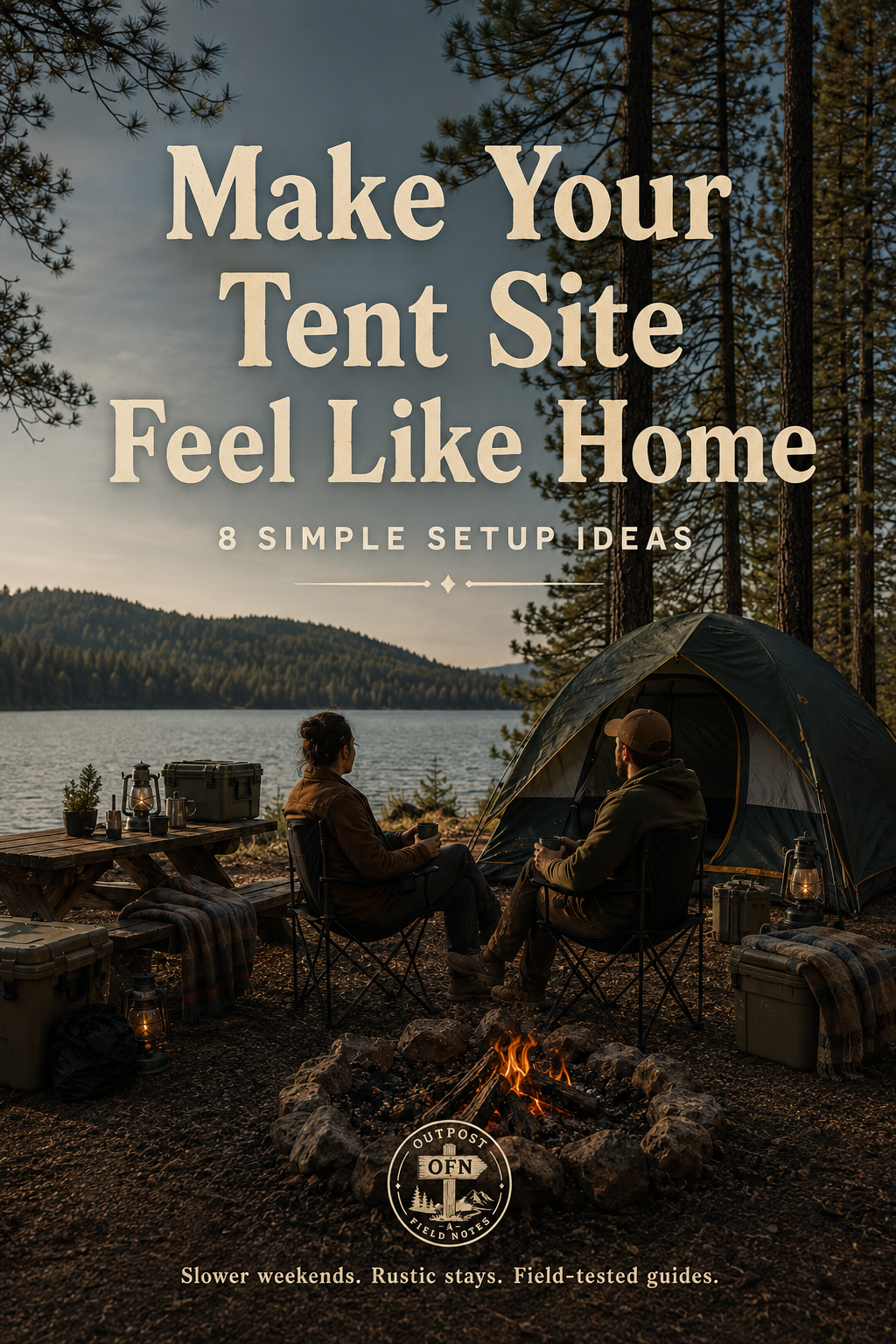
Pick a single spot, usually near the fire or a picnic table, and make it the place where chairs face inward and conversation happens. Having one clear gathering point makes a site feel more like a living room and less like a scattered collection of separate stations, and it gives everyone a natural place to end up once the day’s activities wind down. If you have more people than chairs, a log or a cooler with a cushion works fine, as long as it’s angled toward the same center as everything else.
3. Get things up off the ground
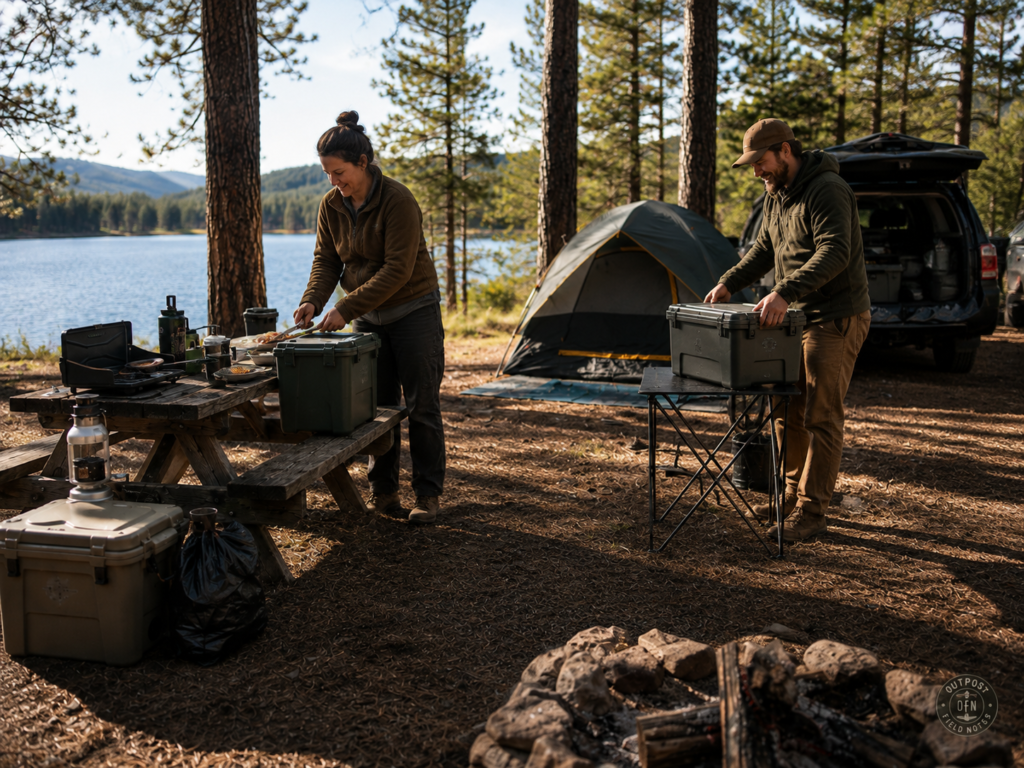
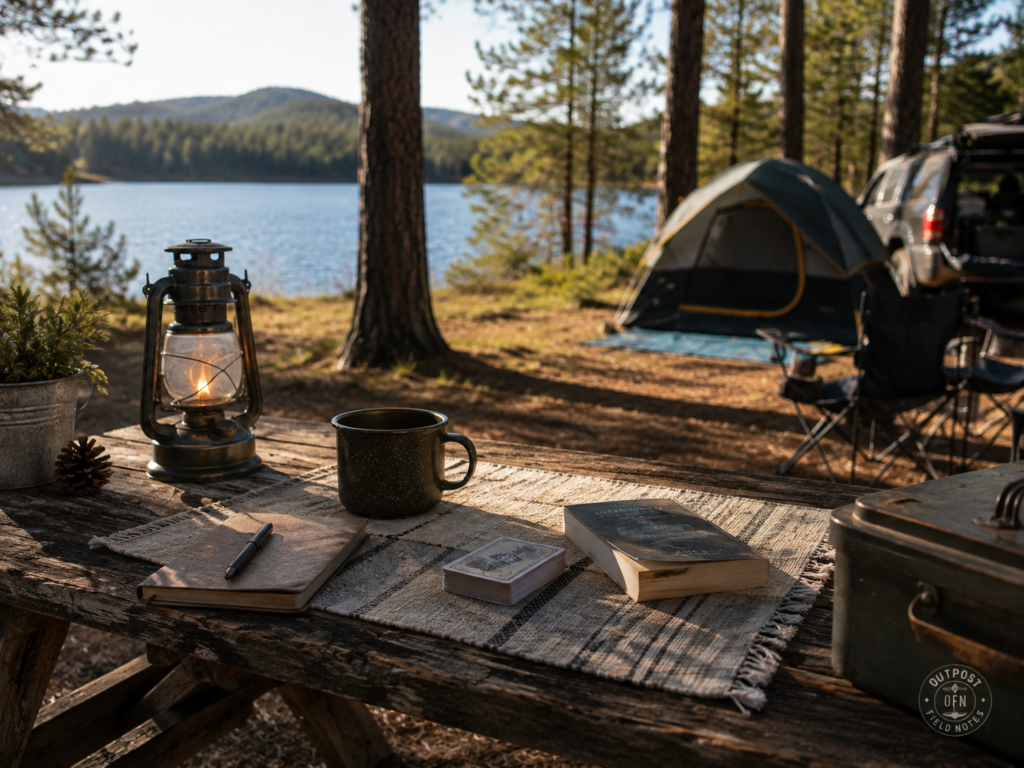
A simple folding table, a hanging organizer, or even a tarp laid out under the gear area keeps your stuff from disappearing into the dirt and grass. It also just looks calmer. A site with everything at ground level tends to feel messier than it actually is, and it makes packing back up at the end of the trip noticeably faster too, since you’re not hunting through leaves and dirt for small items that rolled away.
4. Add a little bit of soft lighting
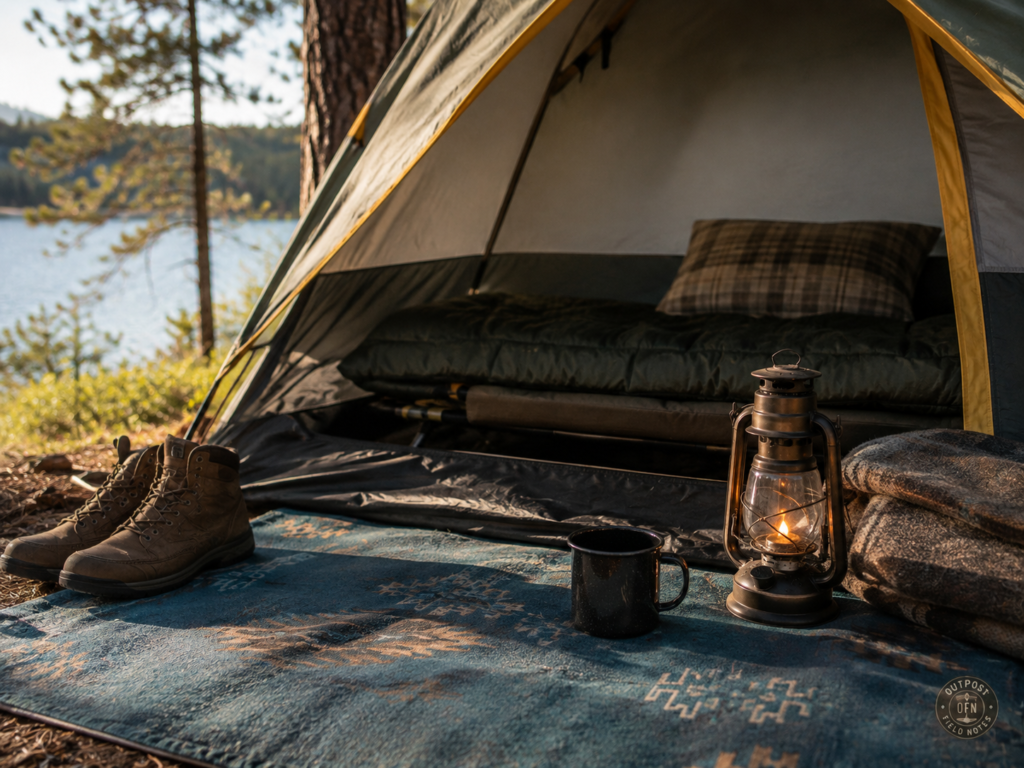
String lights, a couple of lanterns set at different heights, even battery candles on the table: soft light in the evening does more for the mood of a site than almost anything else you can pack. It turns a functional space into a place people want to linger after dark, instead of retreating into the tent the moment the sun goes down. Warm-toned lights tend to feel more like home than the harsh white LEDs some lanterns default to, so it’s worth checking the color temperature before you buy.
5. Bring one thing that isn’t strictly necessary
A small rug for the tent entrance, a favorite mug, a lightweight tablecloth for the picnic table. One small personal touch that has no real function beyond making the space feel like yours is worth the tiny bit of extra packing space it takes up, and it’s often the detail people remember most fondly afterward. It doesn’t need to be expensive, just something that wouldn’t show up on anyone else’s packing list.
6. Keep food and cooking gear in one contained area
Scattered snacks and cooking supplies make a site feel cluttered fast, and they’re also more likely to attract animals. A single bin or cooler station for all things food-related keeps the rest of the site feeling clean and intentional, and it makes mealtime prep faster since everything lives in one predictable place instead of spread across three different bags.
7. Set up shade or a wind break if you can
A simple tarp rigged between trees, or positioning chairs to use natural windbreaks, changes how much time you’ll actually want to spend outside your tent during the day. Comfort during daylight hours is just as important as a good night’s sleep, and a shaded spot to retreat to during the hottest part of the afternoon is worth the ten minutes it takes to rig, especially on a site with little natural tree cover.
8. Do a quick tidy before dark each evening
Spend five minutes each evening putting things back where they belong: chairs stacked, cooler closed, gear off the ground. It’s a small habit, but waking up to an organized site instead of last night’s mess sets the tone for the whole next day, and it makes the whole trip feel less like you’re camping in the aftermath of the day before. It also makes the site easier to check over quickly before you leave, since you already know where everything is supposed to be.
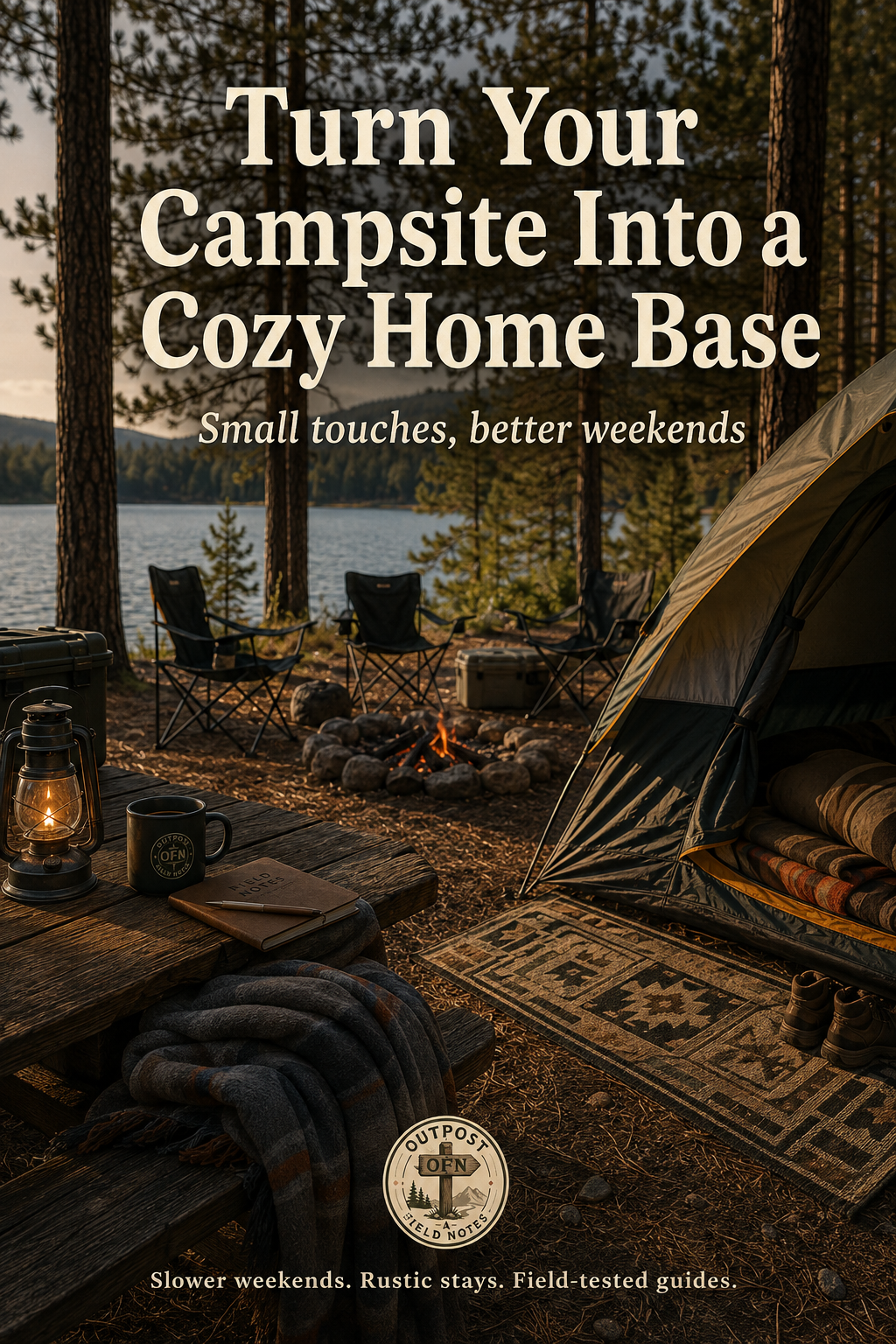
None of this requires new gear or a big budget. It’s mostly about treating the site as a space worth arranging, the same way you’d think about a room in your house. A little intention goes a long way toward making a weekend outside feel less like roughing it and more like a genuine home base, just with better views and a lot less furniture to move.
The campsites that people describe as “cozy” afterward are rarely the ones with the most expensive gear. They’re the ones where someone took an extra fifteen minutes on arrival to think through the layout, instead of just setting the tent wherever the car happened to stop. That fifteen minutes is the whole trick, and it’s free. Try it on your next trip before you touch the tent bag: stand in the middle of the site, look around, and decide where everything goes before any of it lands somewhere by accident.