There’s a specific kind of camper who shows up to a site, unloads the truck in twenty quiet minutes, and seems to have exactly what they need for every situation. It’s not magic and it’s not luck. It’s a packing list that’s been refined trip after trip, usually by learning the hard way once and never forgetting it again. Ask any longtime camper about one of these items and you’ll usually get a short story about the trip that taught them to never leave home without it.
Here are seven items that experienced campers rarely leave behind, and that first-timers almost always do.
1. A second light source
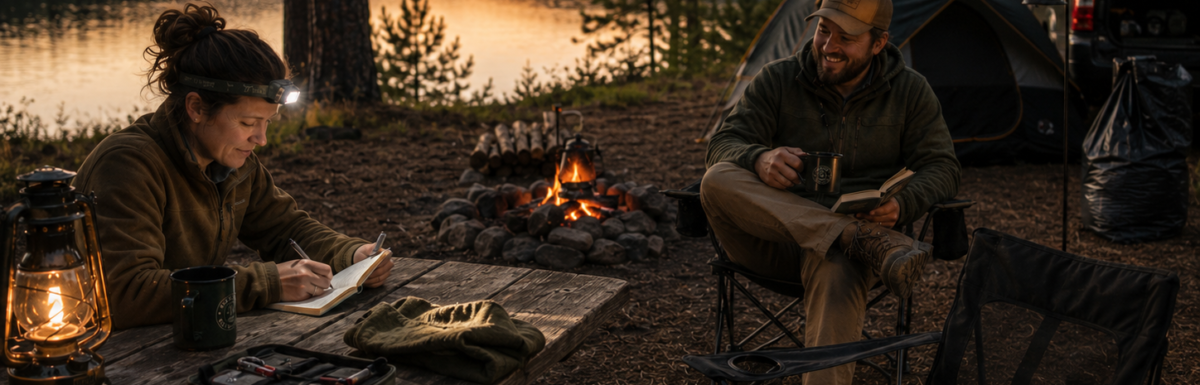
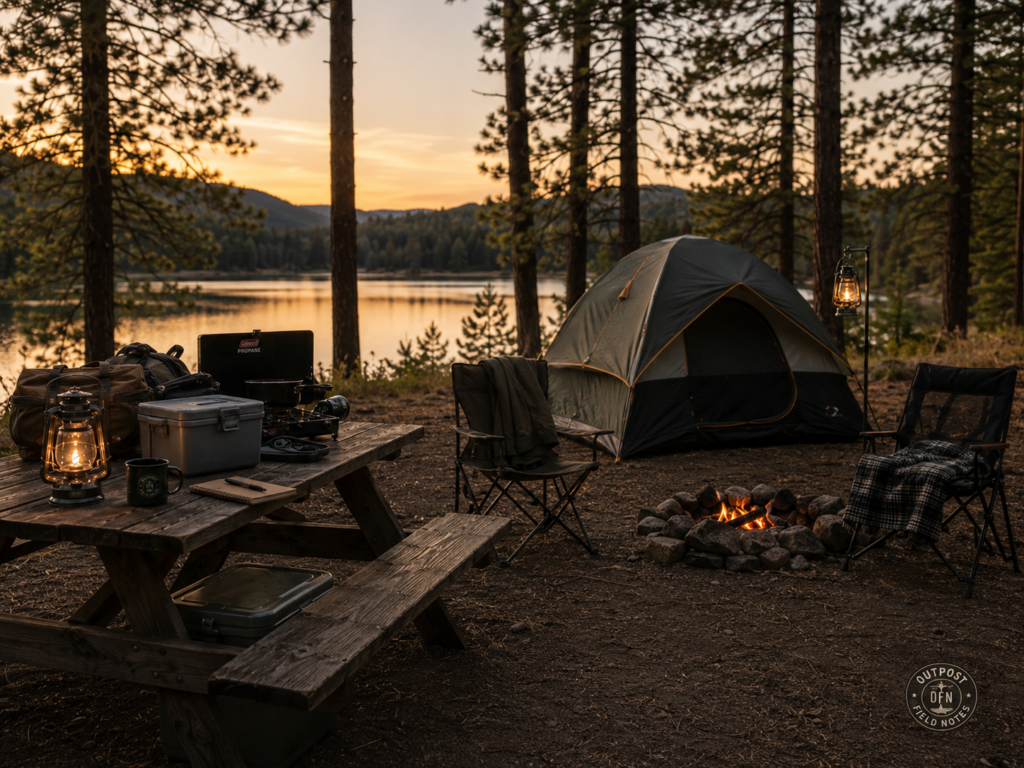
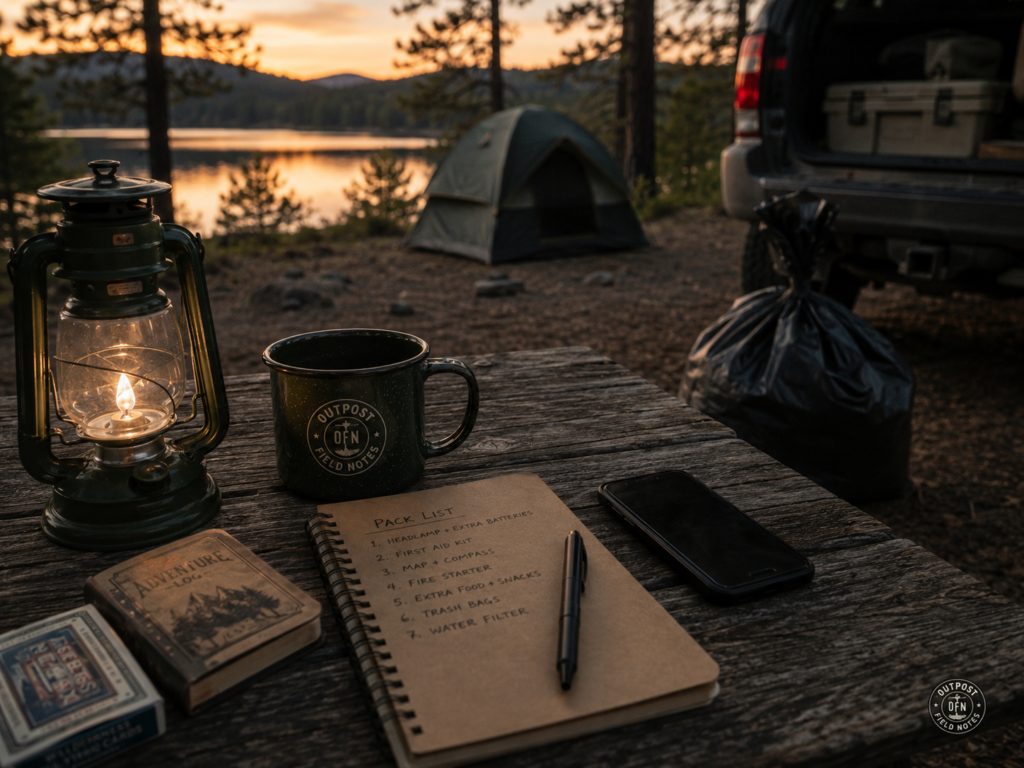
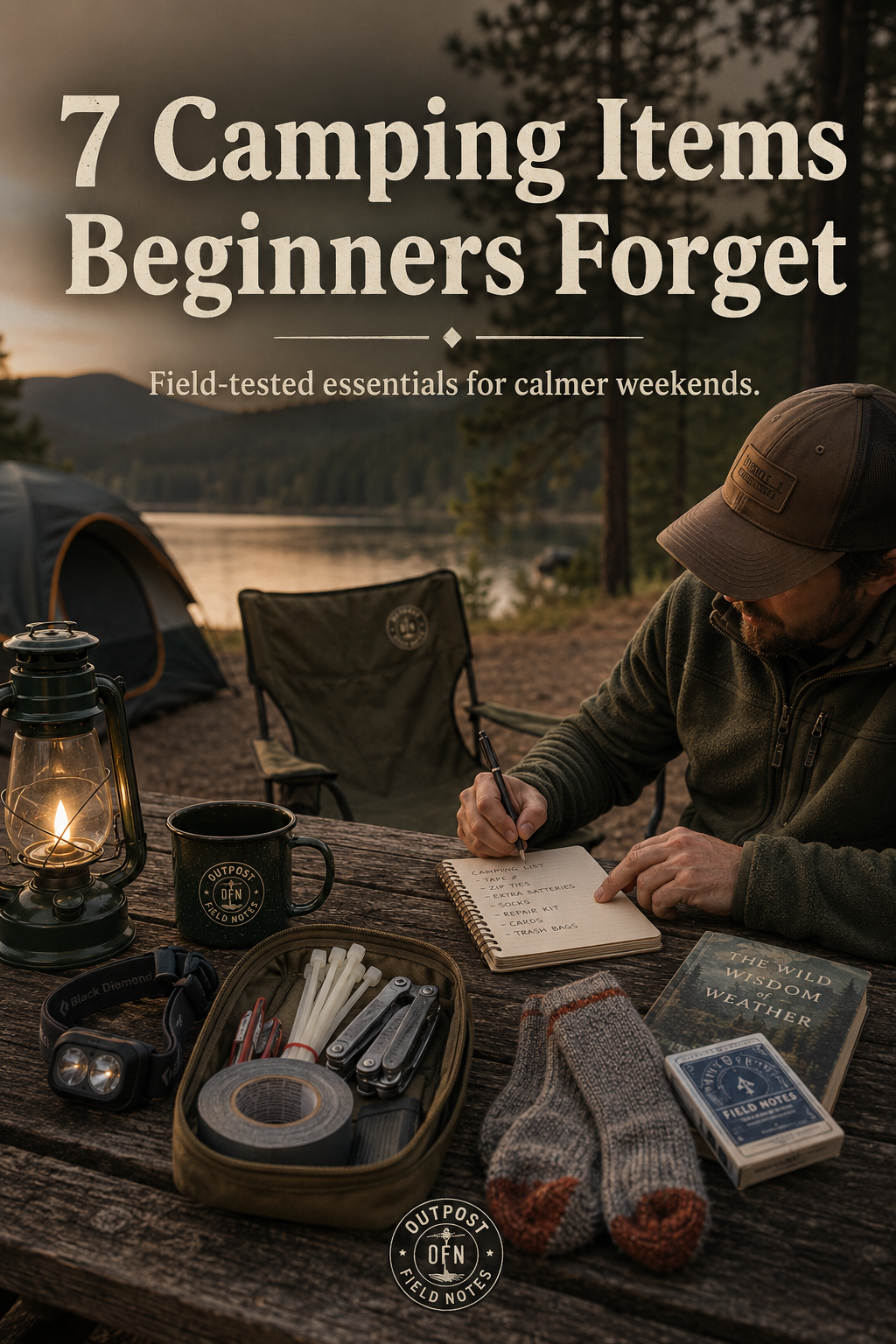
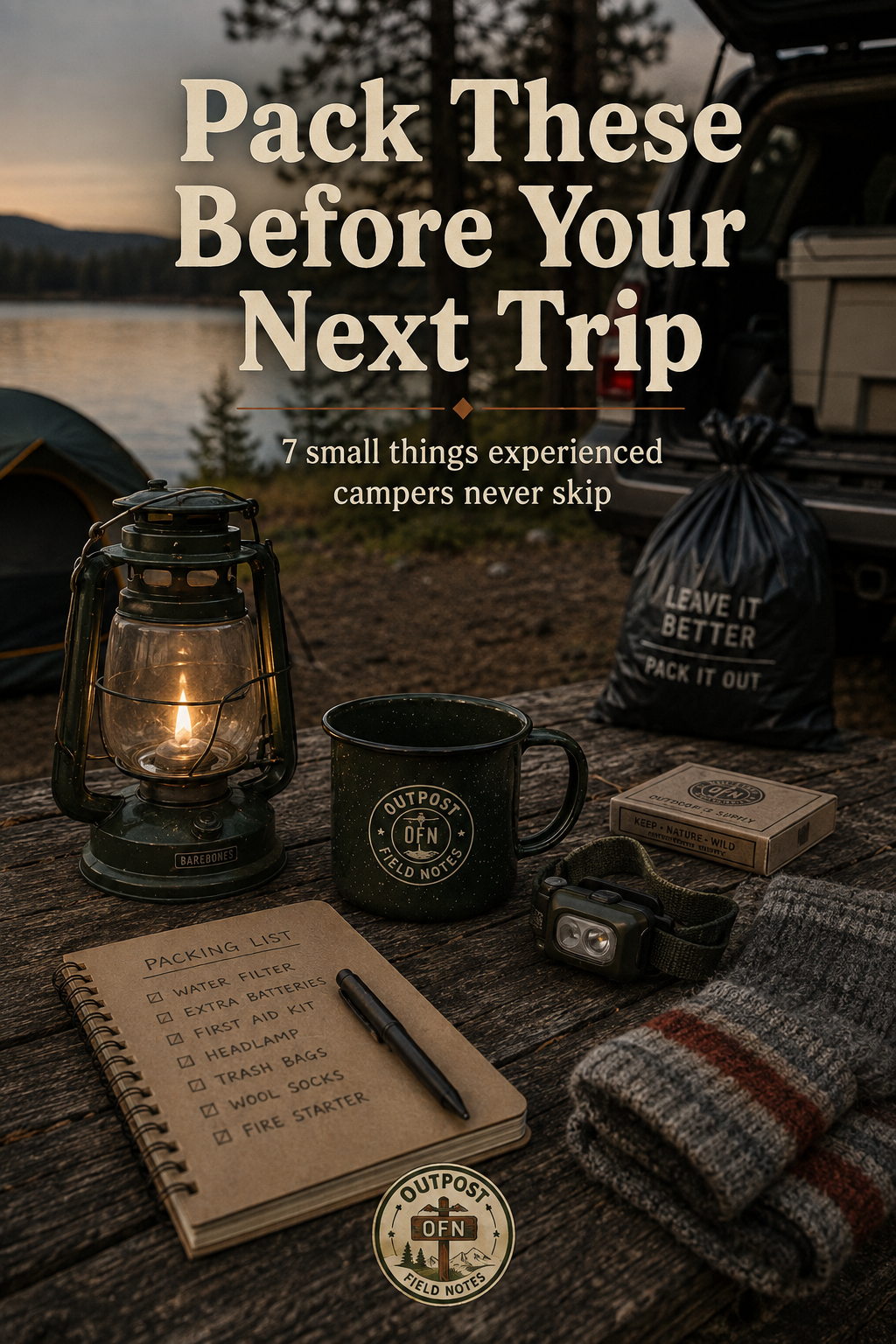
Most people pack one headlamp or one lantern and call it done. Then the batteries die at 9pm, or someone drops the flashlight in the dirt and the lens cracks. Experienced campers bring at least two independent light sources, often a headlamp for hands-free tasks and a lantern for the picnic table, plus spare batteries for both. A small backup light stashed in a jacket pocket is also worth it for the walk back from the bathroom at night.
2. Something to sit on that isn’t the ground or a cooler
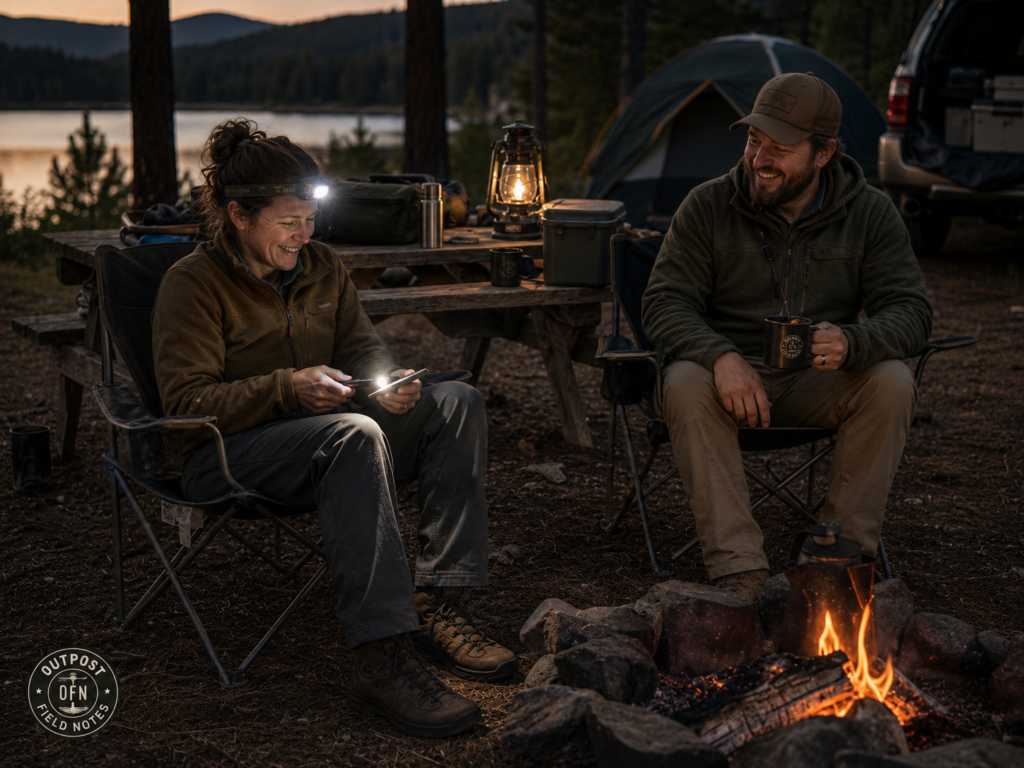
A proper camp chair changes the entire feel of a trip. It sounds minor until you’re four hours into a weekend with nowhere comfortable to land, and suddenly everyone’s cranky and standing around the fire instead of relaxing into the evening. Pack a real chair, not a folding stool as an afterthought, and consider one with an actual back and armrests if you plan to sit through a slow evening by the fire.
3. Duct tape and a small repair kit
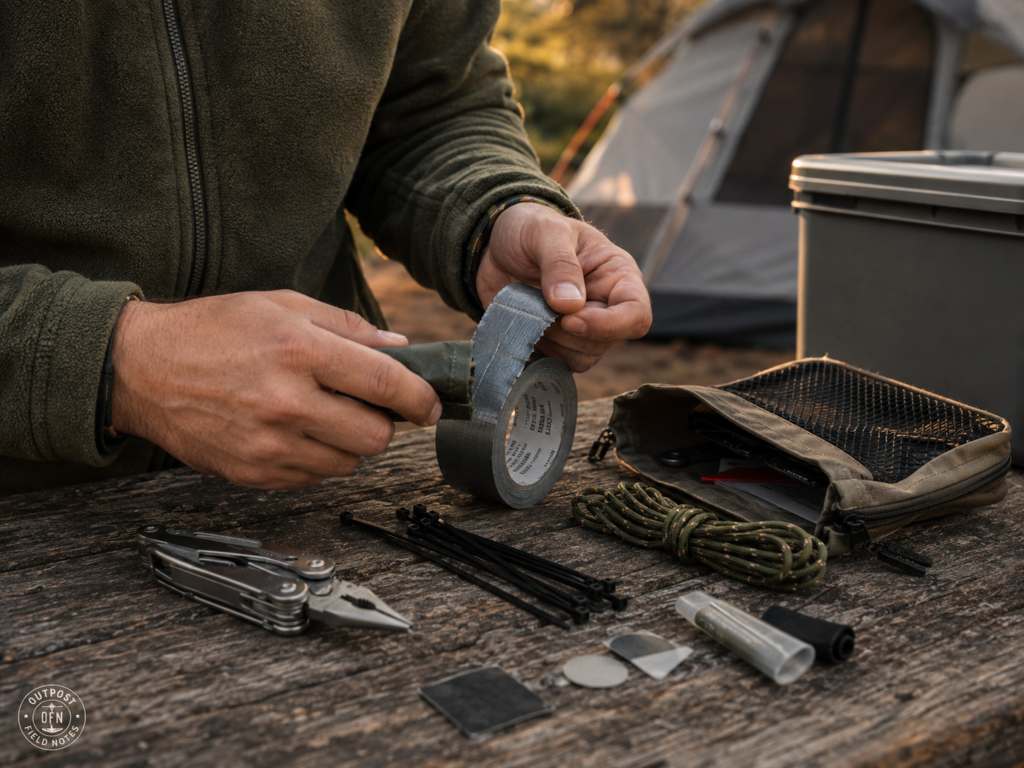
Tent poles bend, zippers jam, and gear fails in small, fixable ways more often than in big dramatic ones. A little duct tape, a few zip ties, and a multi-tool solve an enormous number of problems on the spot, instead of turning a minor issue into a ruined trip. A spare tent pole sleeve or a bit of paracord rounds out a kit that fits in a sandwich bag. None of it costs much, and most of it sits unused trip after trip, right up until the one time it saves the whole weekend.
4. A way to keep the inside of the tent clean
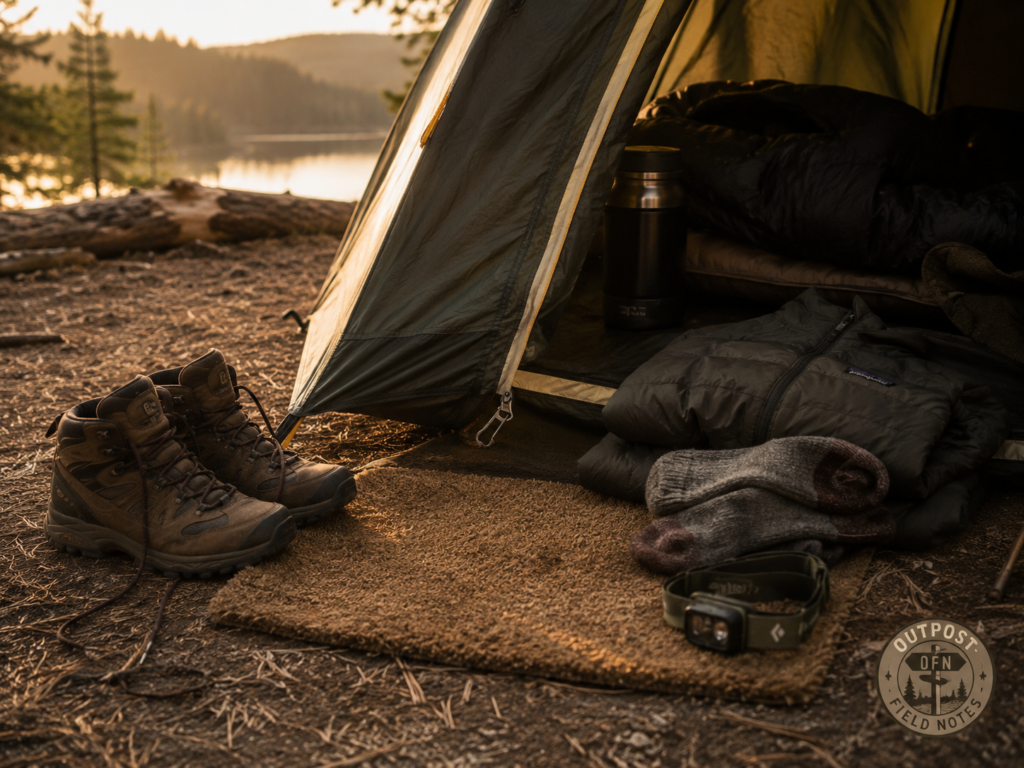
A small mat or towel for the tent entrance keeps dirt, dew, and pine needles from migrating into your sleeping space every time someone comes in or out. It sounds like a small thing, but sleeping on a gritty tent floor for three nights adds up to genuine discomfort, and it’s a far easier fix to prevent than to clean up once it’s already tracked in.
5. More warm layers than seem necessary
Beginners often check the daytime forecast and pack for that. Experienced campers pack for the coldest hour of the trip, usually somewhere between 3am and sunrise, which is almost always colder than anyone expects. An extra layer that goes unused costs you nothing. Being cold at 4am with nothing left to put on costs you a night’s sleep, and often the whole next day feels off because of it. A packable puffy jacket and a spare pair of wool socks, kept dry in a separate bag from everything else, are usually enough insurance to cover the gap between what the forecast said and what the actual night feels like.
6. Something specifically for downtime
Cards, a book, a small game, anything that isn’t a phone. New campers tend to plan the “doing” parts of a trip (hiking, cooking, setting up) but forget that a good chunk of camping is just sitting around with time to fill. Having something on hand for that stretch keeps the trip feeling relaxed instead of restless, especially during that quiet hour after dinner before it’s fully dark.
7. A plan for trash before it becomes a problem
A dedicated trash bag, tied off and stored somewhere animals can’t reach, is one of those details nobody thinks about until they’re standing over an overflowing bag on day two with nowhere to put it. Bring more bags than you think you’ll need, and a plan for where trash lives overnight, ideally in the car rather than anywhere near the tent.
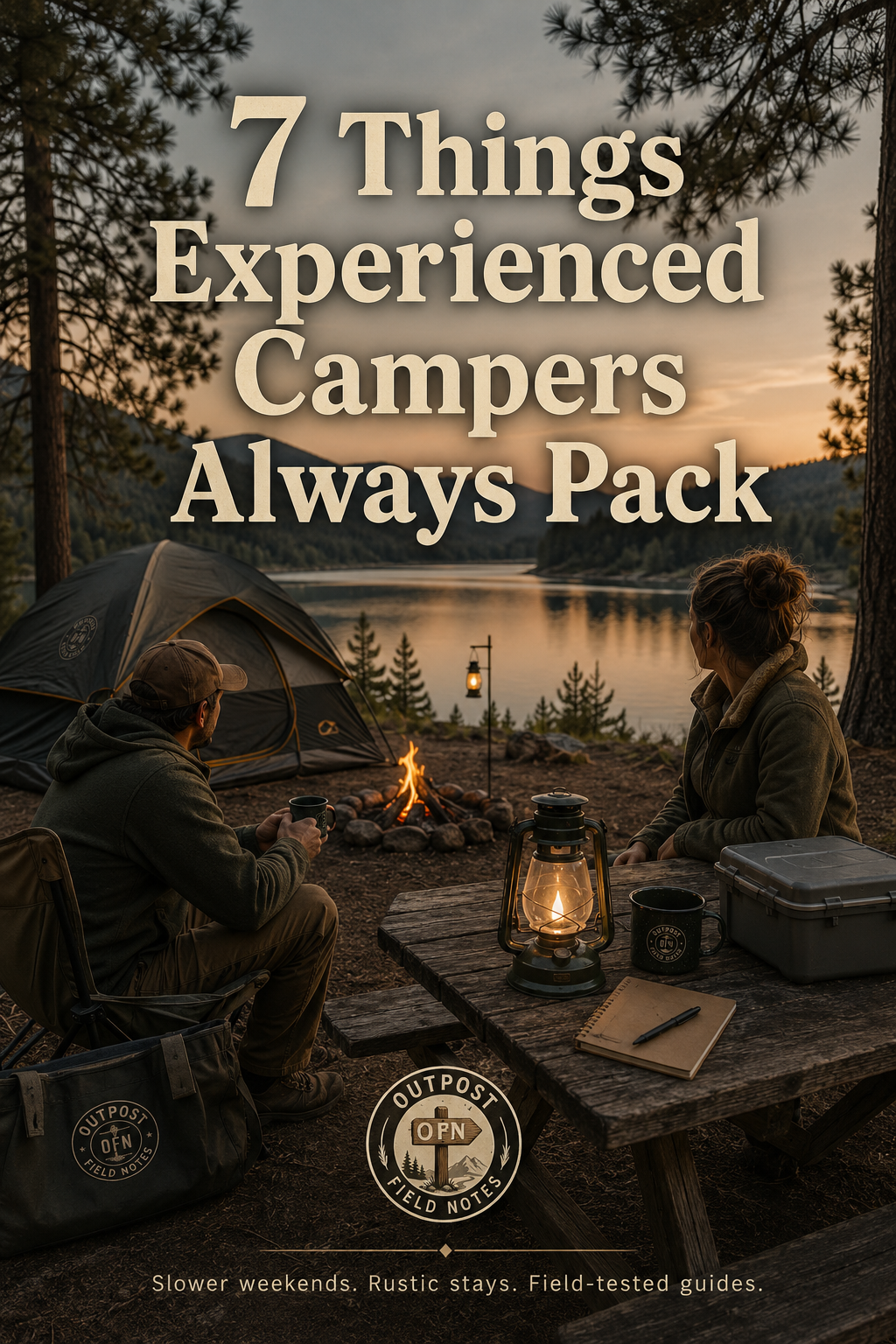
None of these items are expensive or hard to find. What they have in common is that they solve a problem before it happens, rather than scrambling to fix it in the moment. That’s really the whole difference between a first trip and a fifth one: not better gear, just fewer surprises, and a little more patience built into the plan from the start.
If you’re building out your own packing list, it’s worth writing down what you wish you’d packed after every trip, even just a quick note in your phone before you fall asleep on the drive home. In a season or two, you’ll have a list that’s entirely your own, built the same way everyone else’s was: one small lesson at a time, usually the slightly annoying way.
One more thing worth mentioning: none of these seven items need to be expensive versions. A basic folding chair from a hardware store does the same job as one three times the price. The point is having the right category of item on hand before you need it. That’s a very different problem than deciding which brand to buy, and it matters a lot more.
It’s worth saying that none of this is about becoming an expert overnight. Nobody arrives at their first campsite with a perfectly refined kit, and the campers who seem to have it all figured out simply took notes after the trips that went sideways. The list above is really just a shortcut through a few of those lessons, so you don’t have to learn every one of them the hard way yourself. Keep a running note on your phone of anything you wished you’d brought, and by your third or fourth trip you’ll have a kit that fits exactly how you camp, not how a generic list says you should.