Cooking outside sounds simple until you’re standing at a picnic table with a cold stove, a bag of soggy buns, and a raccoon eyeing your cooler from the treeline. Most camp food disasters aren’t about skill. They’re about a handful of small oversights that are easy to fix once you know to look for them, and most of them show up in the first hour of a trip, not the third day.
The frustrating part is that none of it usually shows up on a packing list. You can bring every ingredient you need and still end up with a rough dinner, simply because the plan around cooking it wasn’t quite right. Here are the ten mistakes that trip up new campers most often, and what to do instead.
1. Packing food without a plan for each meal
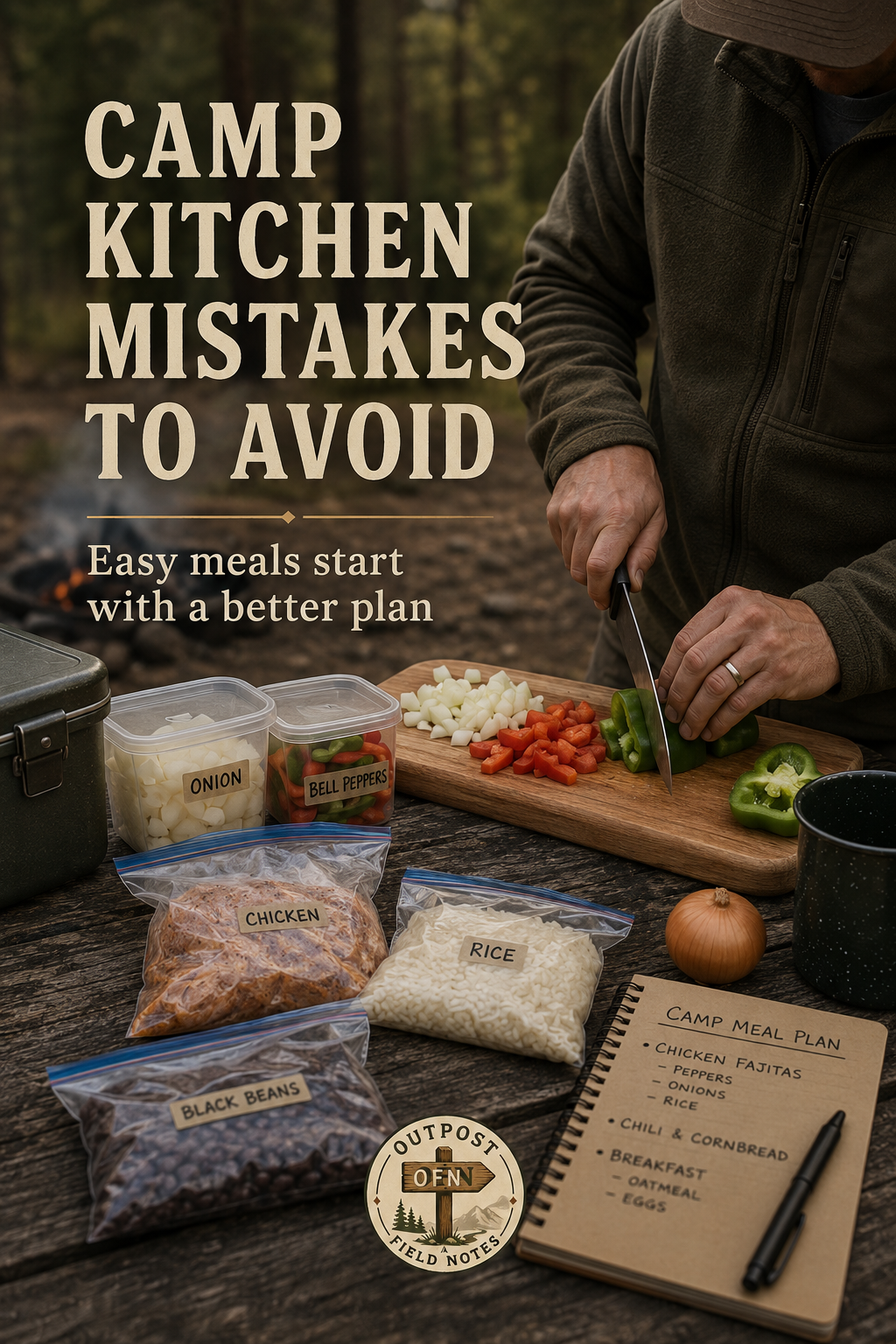
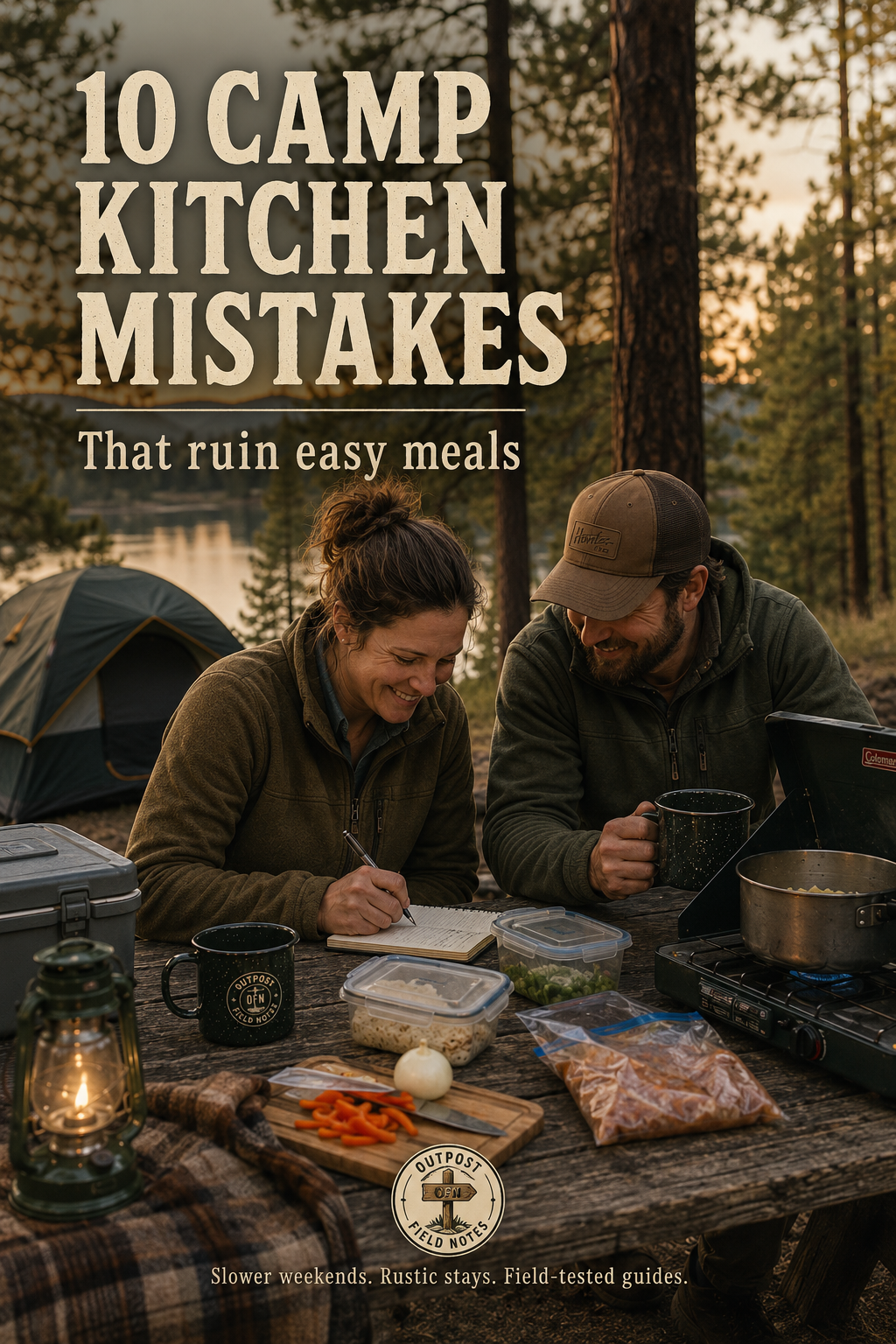
Grabbing a cart full of camp-friendly snacks feels productive, but if you haven’t mapped out what you’re actually eating for breakfast, lunch, and dinner each day, you’ll end up improvising with whatever’s left in the cooler by day two. Write out a simple meal list before you shop. It doesn’t need to be fancy, just enough to know you have three dinners and the ingredients to make them. Tape that list to the inside of the cooler lid so nobody has to guess what tonight’s dinner was supposed to be.
2. Bringing too much perishable food
Coolers are not refrigerators. Ice melts, and once it does, that chicken you packed for day three is a problem. Front-load your perishables for the first day or two, and lean on shelf-stable options (canned beans, tortillas, hard cheese, dried fruit) as your trip goes on. A second, smaller cooler just for drinks also helps, since it gets opened far more often and lets your food cooler hold its cold longer.
3. Skipping prep at home
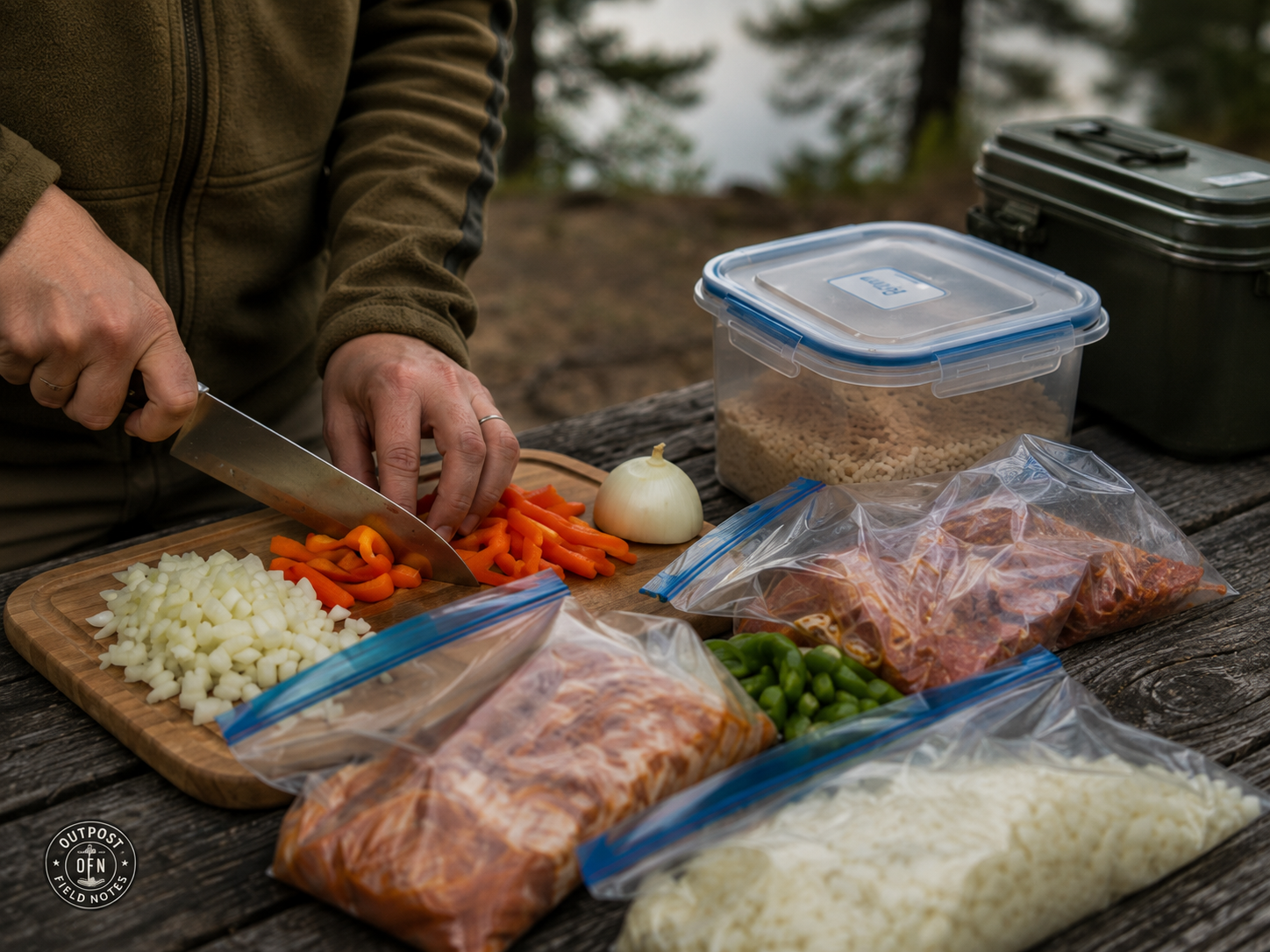
This is the single biggest time-saver in camp cooking. Chop your onions before you leave. Marinate the chicken in a bag. Pre-mix your pancake batter dry ingredients into a labeled container. Camp is not the place to discover your knife skills; do the fussy work in your own kitchen where you have counter space and a trash can. Even something as simple as pre-cracking eggs into a leakproof jar saves a genuinely annoying cleanup later.
4. Only having one way to cook
If your entire dinner plan depends on a single burner working perfectly, you’re one dead fuel canister away from a hungry night. Bring a backup: a second small stove, a grate for the fire, or even cold options that need no cooking at all. That’s not overpacking. That’s just planning for the fact that a single dead fuel canister shouldn’t be able to cancel dinner.
5. Not accounting for wind
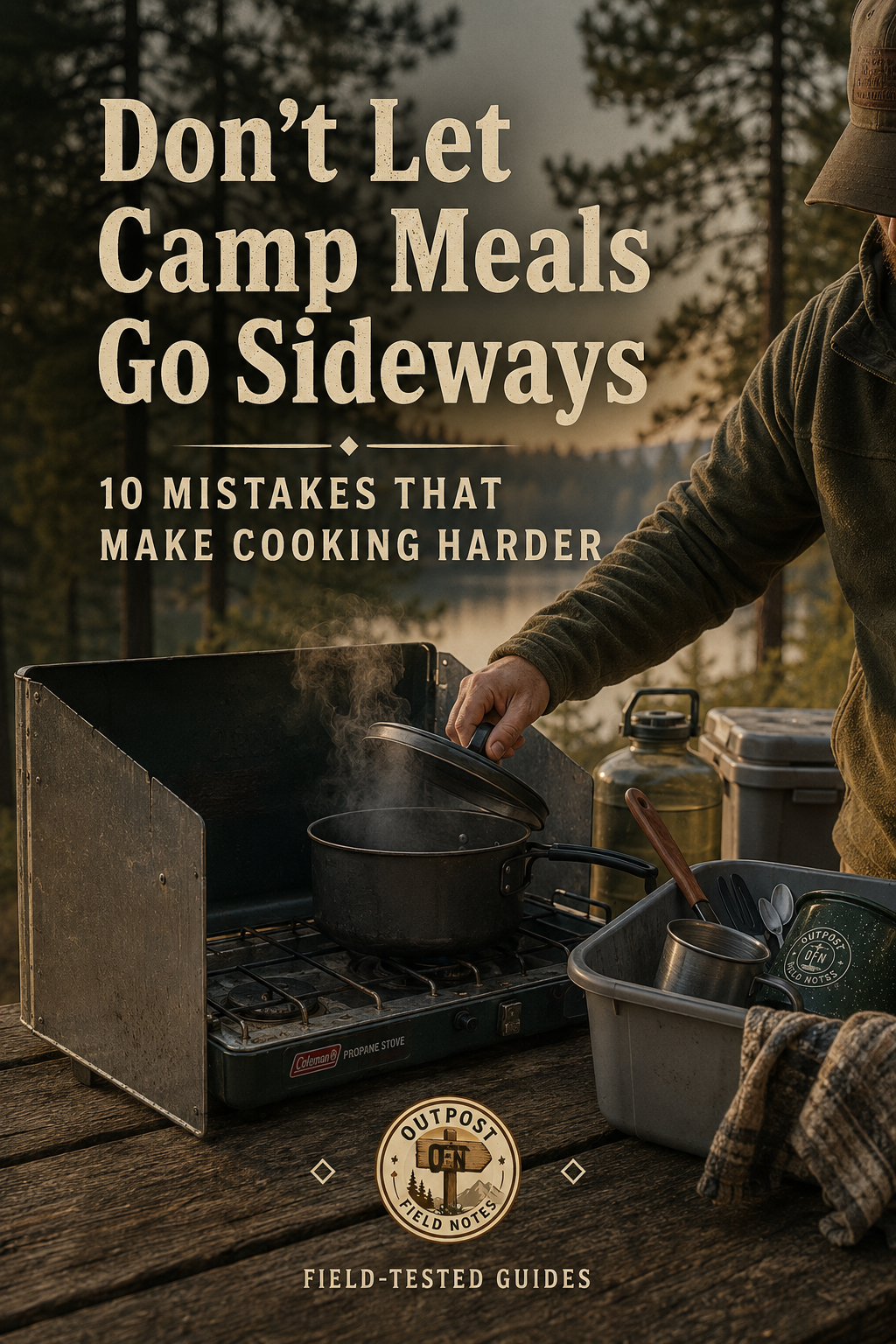
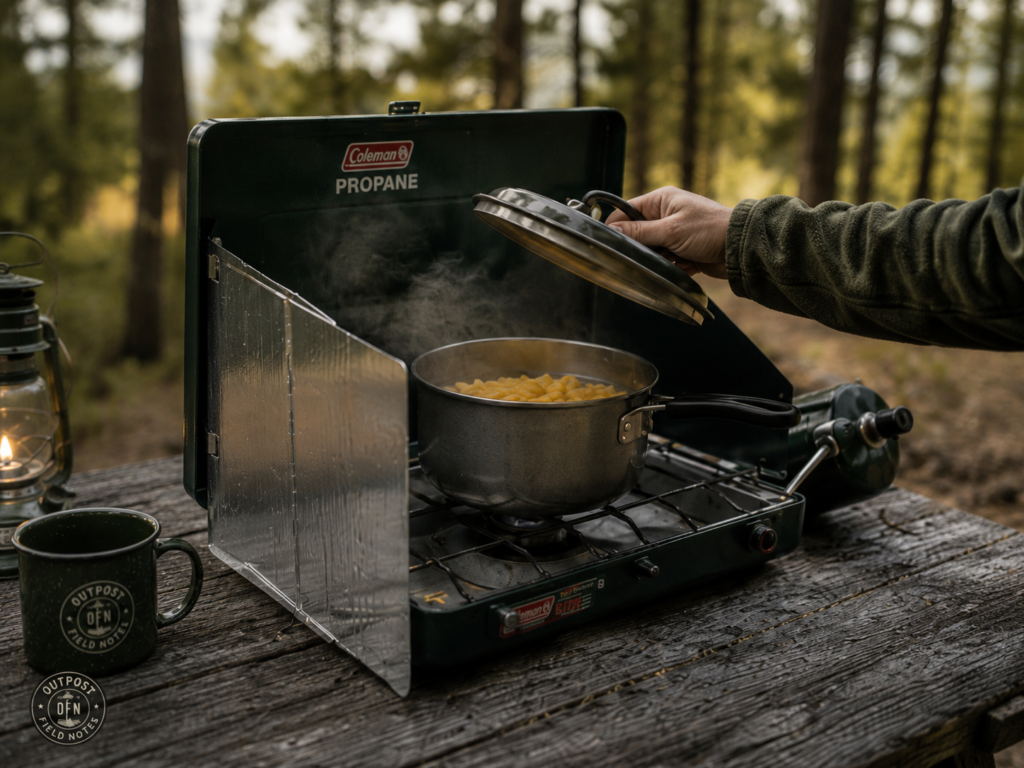
An open flame in an open field behaves very differently than a stove on your kitchen counter. Wind will blow out a burner, spread cooking odors farther than you’d think, and cool a pot faster than it should. A simple windscreen, or cooking near your vehicle or a natural windbreak, solves most of this. If you’re cooking near the tent, keep an eye on which way the smoke is drifting so it doesn’t end up soaked into your gear.
6. Forgetting a real plan for cleanup
Dishes pile up fast at camp, and greasy water left sitting attracts every animal in a mile radius. Bring a designated dish bin, biodegradable soap, and a way to strain food scraps out of your wastewater before you dump it (check your site’s rules on where that’s allowed). Cleanup is part of the meal, not an afterthought, and doing it right after you eat, rather than letting dishes sit overnight, keeps the whole site smelling like a campsite instead of a dumpster.
7. Underestimating water for cooking and cleanup
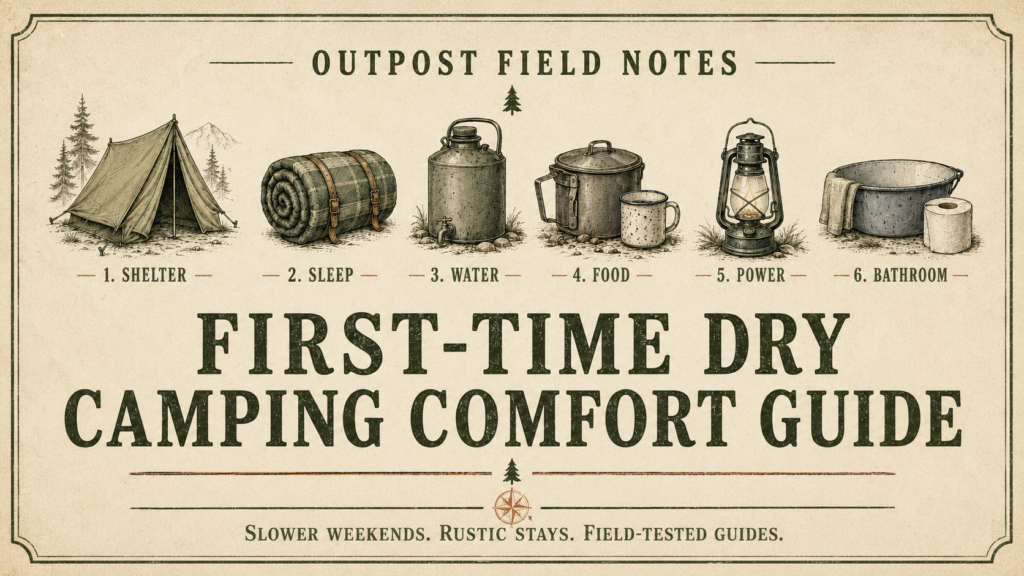
New campers usually pack enough water to drink, then run short when it’s time to boil pasta, rinse a pot, or rehydrate something. A rough rule: budget more water than feels necessary, especially if you’re not near a reliable source. Running low on water mid-trip turns every meal into a negotiation, and it’s one of the six comfort zones we always tell people to plan for separately from drinking water.
8. Not securing food from wildlife
Even if you’re not in bear country, raccoons, squirrels, and birds are bold and persistent. A cooler with a working latch, food stored in the car overnight, and a clean cooking area go a long way. Animals that get one easy meal from campers will keep coming back, and not just to your site, which is part of why so many campgrounds now post specific food storage rules.
9. Cooking something you’ve never made before
Camp is a rough environment to test a brand-new recipe for the first time: unfamiliar heat source, no backup ingredients, and an audience that’s hungry and waiting. Stick to meals you’ve made at home at least once, even if you simplify them for the trip. Save the ambitious new recipe for a night when dinner failing isn’t a real possibility.
10. Forgetting the small extras that make food actually good
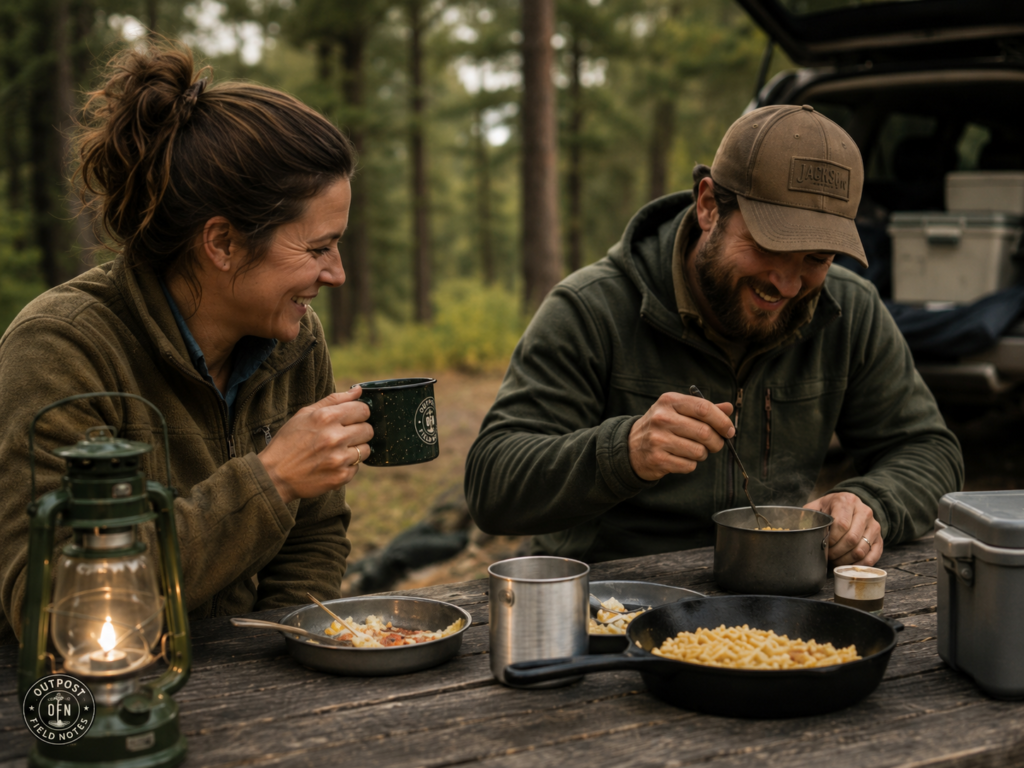
Salt, hot sauce, butter, a squeeze of lemon. These weigh almost nothing and take up little space, but they’re the difference between food that’s just fuel and food that actually feels like a treat after a day outside. Pack a small “flavor kit” alongside your main ingredients, and don’t be surprised if it becomes the most-used item in the whole food bin.
Food is one of the areas that quietly makes or breaks a camping trip, which is exactly why it’s one of the six comfort zones we talk about at Outpost Field Notes. Get the food part right, even loosely, and everything else about the trip tends to feel easier too. It’s rarely the fancy dinner that people remember; it’s the trip where nobody went hungry and nobody had to solve a problem they hadn’t planned for.
Slower weekends, rustic stays, field-tested guides: that’s what we’re here for.